
Cannabis Terpenes: The Complete Guide to Aromas, Flavors, and Effects
Open a fresh jar of cannabis and the first thing you notice isn't THC — it's the smell. That burst of citrus, pine, pepper, or lavender comes from terpenes: aromatic compounds that shape how every strain looks, smells, tastes, and feels. Terpenes aren't unique to cannabis. They're the same molecules that make lemons bright, pine forests crisp, and lavender calming. But in cannabis, they do something special: they work alongside cannabinoids like THC and CBD to influence the overall experience.
This guide breaks down what cannabis terpenes are, how they work, the most common ones you'll see on a dispensary menu, and how to use terpene profiles to choose products that match what you actually want to feel. Whether you're a first-time shopper or a seasoned consumer looking to go beyond "indica vs. sativa," understanding terpenes is the single biggest upgrade you can make to how you pick cannabis.
What Are Cannabis Terpenes?
Terpenes are naturally occurring aromatic compounds produced in the trichomes of the cannabis plant — the same sticky, crystal-like glands that produce cannabinoids. Chemically, terpenes are hydrocarbons built from repeating isoprene units, and more than 150 of them have been identified in cannabis so far, though only a handful appear in high enough concentrations to affect aroma and experience.
In nature, plants evolved terpenes for protection: to repel pests, attract pollinators, and help recover from damage. In cannabis, they do all of that — and they're also responsible for the distinct personality of every strain. Two flowers with identical THC percentages can smell, taste, and feel completely different because their terpene profiles are different.
If you want to understand where terpenes are produced on the plant itself, see our guide to what trichomes are. For how terpenes interact with THC, CBD, and minor cannabinoids, see the entourage effect.
How Terpenes Work in Cannabis
Terpenes do two things at once. First, they're responsible for aroma and flavor — the sensory layer of cannabis. Second, and more interestingly, emerging research suggests they can modulate how cannabinoids interact with your body. Some terpenes appear to bind directly to cannabinoid receptors, while others may influence the blood-brain barrier, neurotransmitter activity, or how your body metabolizes THC.
A 2021 study published in Scientific Reports found that several cannabis terpenes produced cannabinoid-like effects in mice and appeared to amplify the effects of cannabinoids when combined, supporting the idea that terpenes are pharmacologically active rather than just aromatic (LaVigne et al., 2021).
Terpenes and the Entourage Effect
The "entourage effect" is the theory that cannabis compounds — cannabinoids, terpenes, and flavonoids — work better together than in isolation. The idea was popularized by neurologist Dr. Ethan Russo, whose 2011 paper Taming THC in the British Journal of Pharmacology proposed specific cannabinoid–terpene combinations for anxiety, inflammation, sleep, and more (Russo, 2011). The research is still developing, but it's the main reason dispensary shoppers are moving past THC percentage as the only number that matters.
The Most Common Cannabis Terpenes (and Their Effects)
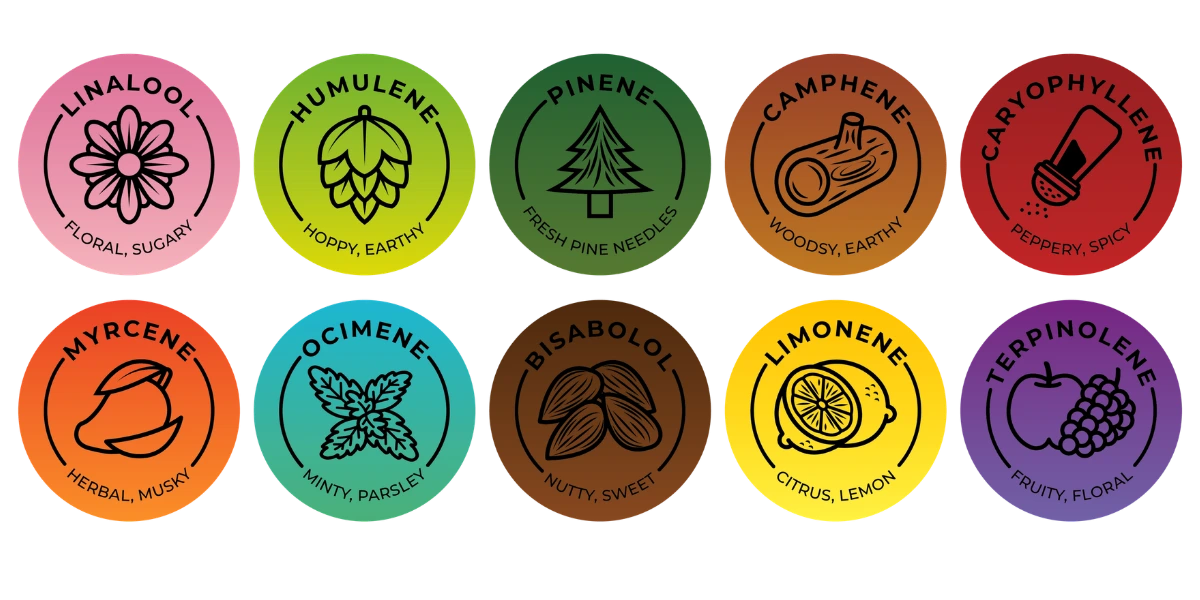
These are the terpenes you'll see most often on lab reports and dispensary menus. Effects listed are based on preliminary research and user reports — individual experience will vary.
Terpenes vs. Cannabinoids: What's the Difference?
Cannabinoids and terpenes are both produced in the same trichomes and often get confused, but they play different roles. Cannabinoids like THC and CBD interact directly with your endocannabinoid system to produce the major effects of cannabis — intoxication, pain relief, appetite changes. Terpenes are aromatic molecules that shape flavor and, according to current research, modulate and fine-tune those cannabinoid effects.
In short: cannabinoids are the engine, terpenes are the steering. For a deeper look at cannabinoids specifically, see our guides to THC vs. CBD and major vs. minor cannabinoids. For how they all work together inside your body, see our guide to the endocannabinoid system.
How to Choose Cannabis by Terpene Profile
If you've ever bought a strain with high THC and been disappointed by how it made you feel, the terpene profile is probably the answer. Here's how to shop smarter.
1. Ask for the lab report (COA)
Every legal cannabis product in Ohio and Maryland is tested, and most dispensaries can show you a Certificate of Analysis listing the product's terpene breakdown by percentage. The top 2–3 terpenes on that list will tell you more about how the product will feel than the indica/sativa label will.
2. Match terpenes to the feeling you want
Want to wind down and sleep? Look for myrcene and linalool.
Want energy and mood lift? Look for limonene and pinene.
Want calm focus without feeling tired? Look for caryophyllene and pinene.
Want cerebral, creative effects? Look for terpinolene.
Want anti-inflammatory support? Look for caryophyllene and humulene.
3. Trust your nose
If a strain smells amazing to you, there's a reasonable chance its terpene profile aligns with what your body responds well to. Shopping by smell isn't scientific, but it's a useful shortcut — and it's why budtenders at both of our Bloom locations encourage customers to ask for a sniff jar whenever possible.
Ready to put this into practice? Browse terpene-tested flower and concentrates at Bloom Ohio or Bloom Maryland.
Do Terpenes Affect the High?
Short answer: probably yes, but not in the way people often assume. Terpenes don't get you "high" on their own — they aren't intoxicating in the way THC is. What the current research suggests is that terpenes can shape the character of a THC high: how relaxed, how clear-headed, how anxious, how sleepy you feel. This is why two strains with the same 24% THC reading can feel completely different.
That said, the science is young and some of the most confident claims online outrun the evidence. A 2020 review in Frontiers in Neurology concluded that while the entourage effect is a promising framework, human clinical trials are still limited and more research is needed before doctors can make prescriptive claims (Ferber et al., 2020).
How to Preserve Terpenes in Your Cannabis
Terpenes are delicate. They're more volatile than cannabinoids and start degrading the moment cannabis is harvested. Heat, light, oxygen, and time are all enemies of a good terpene profile. A few simple habits will keep your flower tasting and feeling the way it's supposed to:
Store in airtight glass — not plastic bags, which absorb terpenes and can introduce static.
Keep it cool and dark — a drawer or cabinet away from sunlight is ideal; avoid the fridge, which causes condensation.
Control humidity — 62% RH is the industry standard for flower; humidity packs help.
Don't grind until you're ready — ground flower loses terpenes fast through exposed surface area.
Vape at lower temperatures — most cannabis terpenes boil off between 310–400°F, below the temperature needed to vaporize THC.
For a deeper breakdown of storage, see our guide to how to store cannabis. For why temperature matters so much to terpene preservation, see vaping vs. smoking cannabis.
Frequently Asked Questions About Cannabis Terpenes
Are terpenes only found in cannabis?
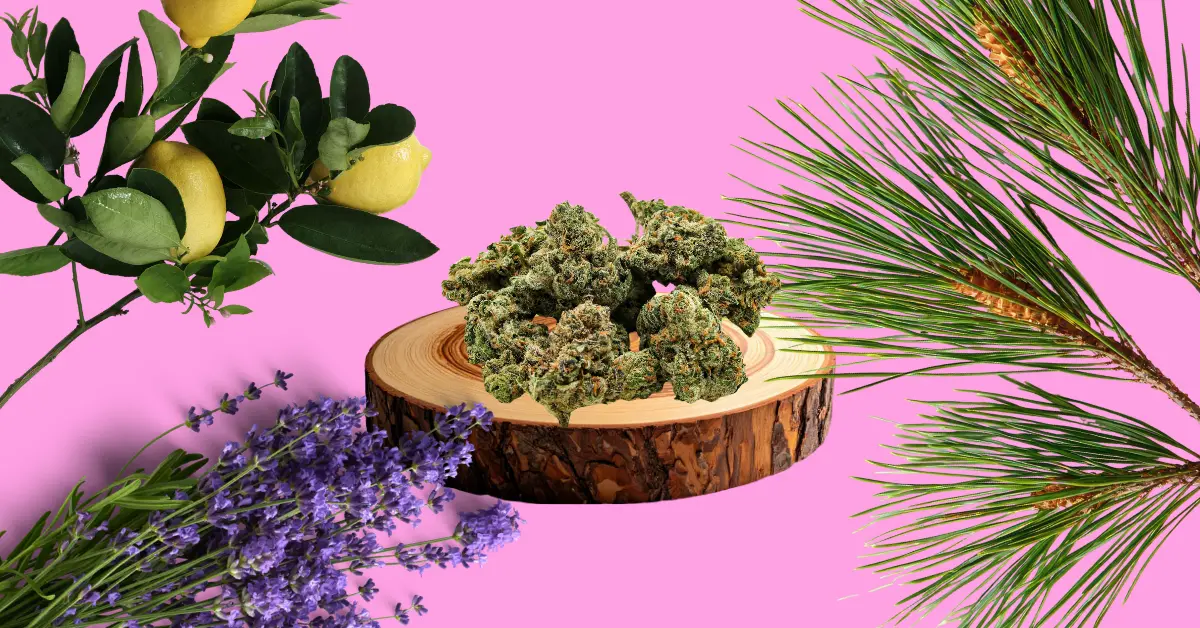
No. Terpenes are found throughout the plant kingdom. The same limonene in your favorite citrusy strain is in lemon peels, and the linalool in a calming indica is the main aromatic compound in lavender. What makes cannabis unique is the sheer number and concentration of terpenes it produces in a single plant.
Can terpenes get you high?
Terpenes aren't intoxicating the way THC is. You can't smoke pure limonene and feel "high." But terpenes appear to influence how cannabinoids feel in the body, which is why they're a key part of how a strain's overall experience is shaped.
What's the difference between a terpene and a terpenoid?
Terpenes are the raw hydrocarbons produced by the plant. Terpenoids are terpenes that have been chemically modified, usually through drying and curing, by oxidation. On most lab reports and menus the two words are used interchangeably.
Do terpene percentages on a lab report matter?
Yes. Total terpene content in commercial flower typically ranges from 0.5% to 3.5%. Anything above about 2% total terpenes is considered loud and high-quality. The top individual terpene is usually the most important number — it's the one that defines the strain's personality.
Are added terpenes in vape cartridges safe?
Many vape cartridges reintroduce either cannabis-derived or botanical (non-cannabis) terpenes to restore flavor lost during extraction. Cannabis-derived terpenes added back to a cannabis product are generally considered safe. Botanical terpenes from unregulated sources are a bigger question mark. Always buy from licensed dispensaries that test for residual solvents and contaminants.
Which terpene is best for anxiety?
Preliminary research most often points to linalool, limonene, and beta-caryophyllene for stress and anxiety. But the best terpene is the one that works for your body, which is why trying small amounts of different profiles — ideally with guidance from a budtender or medical provider — is more useful than chasing a single "best" answer.
Do edibles preserve terpenes?
Usually not well. Most terpenes are volatile and break down during the heat of decarboxylation and cooking, which is why edibles typically taste like the infusion (butter, oil, candy) more than the strain. Some modern live-resin edibles are formulated to preserve terpene content. For more, see our guides to decarboxylation and cooking with cannabis.
The Bottom Line on Cannabis Terpenes
Terpenes are the most underrated part of the cannabis shopping experience. They're the reason one strain puts you to sleep and another gets you motivated to clean the kitchen — even when the THC percentages look identical. Once you start reading labels for terpene content instead of just chasing the highest THC number, the way you choose cannabis changes permanently.
Shop terpene-tested products at Bloom Ohio or Bloom Maryland, or explore more in our Education section.