THC vs. CBD: The Complete Comparison Guide
THC and CBD are the two most famous compounds in cannabis, and the two most misunderstood. One gets you high, the other doesn't — that's true, but it's barely the beginning. These two cannabinoids behave almost like opposites in some ways, and they complement each other in others. Understanding how they differ is the foundation for everything else: picking the right product, choosing the right ratio, and getting the effects you actually want.
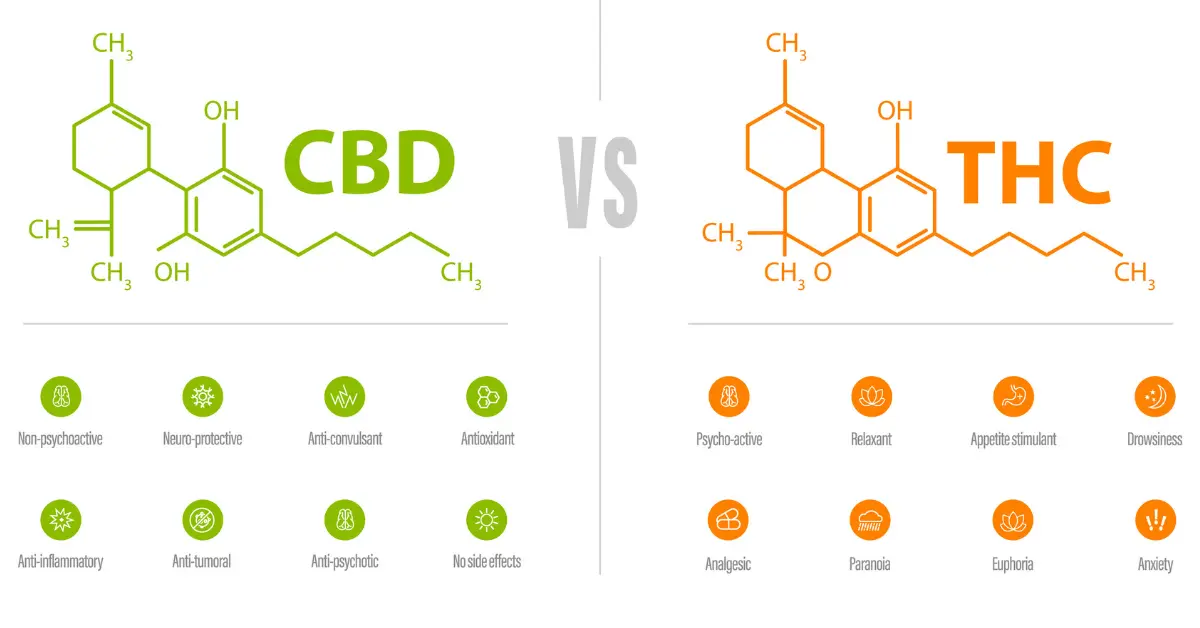
THC and CBD molecular structures compared side by side with key differences listed.
The Short Answer
THC (tetrahydrocannabinol) is intoxicating and produces the classic cannabis high. CBD (cannabidiol) is non-intoxicating and produces calming, anti-inflammatory effects without making you feel "high." Both come from the same plant and both interact with your endocannabinoid system — just in very different ways.
What Is THC?
THC is the primary psychoactive compound in cannabis. When you feel euphoria, altered perception, relaxation, hunger, or sensory enhancement from cannabis, THC is responsible. It was first isolated by Israeli chemist Raphael Mechoulam in 1964, and for decades it was the cannabinoid researchers and regulators focused on almost exclusively.
THC works by binding directly to CB1 receptors in the brain and central nervous system. CB1 receptors are part of the endocannabinoid system, and activating them produces the classic effects of being high. THC also has therapeutic uses: appetite stimulation, pain relief, nausea control, and muscle relaxation are all well-documented.
Effects people commonly report from THC:
Euphoria and mood elevation
Relaxation or sedation
Appetite stimulation ("the munchies")
Altered time perception
Pain relief
In higher doses: anxiety, paranoia, rapid heart rate
What Is CBD?
CBD is the second most abundant cannabinoid in most cannabis, and the most famous non-intoxicating one. It was identified in 1940, about 25 years before THC, but was largely ignored until the early 2000s. Today it's everywhere — in flowers, tinctures, topicals, drinks, pet treats, and even FDA-approved medications.
Unlike THC, CBD doesn't bind strongly to CB1 or CB2 receptors. Its mechanism is more indirect. It appears to influence enzymes that regulate endocannabinoid levels, and it interacts with several non-cannabinoid receptors involved in serotonin signaling, pain perception, and inflammation.
The most definitive clinical use of CBD is for certain forms of treatment-resistant epilepsy. The FDA approved Epidiolex, a purified CBD medication, for Lennox-Gastaut and Dravet syndrome in 2018 after clinical trials showed significant seizure reduction (Devinsky et al., 2017, NEJM).
Effects people commonly report from CBD:
Reduced anxiety and stress
Anti-inflammatory effects
Improved sleep quality (indirect)
Pain relief, especially neuropathic pain
No intoxication, no "high"
THC vs. CBD: The Key Differences
Intoxication
THC is intoxicating. CBD is not. This is the single biggest difference and the reason CBD is legal in more places than THC.
Receptor Activity
THC binds directly to CB1 receptors; CBD doesn't. CBD is sometimes called a CB1 "modulator" because it can influence how other compounds (including THC) interact with those receptors.
Legal Status
Varies by state. In Ohio and Maryland, both THC and CBD products are legal within the state's regulated cannabis program. Hemp-derived CBD is federally legal under the 2018 Farm Bill, but rules vary locally.
Drug Testing
Standard drug tests look for THC metabolites, not CBD. Pure CBD won't typically trigger a positive test, but full-spectrum CBD products contain trace THC that can, especially with heavy use.
Side Effects
THC's main side effects are anxiety, paranoia, and short-term memory impairment, especially at high doses. CBD is generally very well tolerated; side effects are usually mild and can include drowsiness, dry mouth, or changes in appetite. CBD can also interact with certain medications by affecting the liver enzymes that metabolize them — worth checking with a doctor if you take prescriptions.
THC + CBD: How They Work Together
Some of the most interesting research on cannabis involves THC and CBD used together. CBD appears to reduce some of THC's less pleasant effects — anxiety, paranoia, rapid heart rate — without eliminating the beneficial effects. This is part of the reason balanced 1:1 products have become popular, especially among newer consumers and medical patients. The interaction is one of the clearest examples of the entourage effect.
How to Choose a Ratio
Most cannabis products list a THC:CBD ratio. Here's how to think about it:
High THC / low CBD: Strongest intoxicating effects. Best for experienced users, recreational use, or strong medical symptoms.
1:1 ratio: Balanced effects. Mild high, strong therapeutic potential, reduced anxiety risk. Great for beginners and daytime use.
2:1 or 4:1 CBD-dominant: Minimal intoxication, mostly therapeutic. Good for pain, inflammation, and stress without impairment.
Pure CBD: No intoxication at all. Best for people who want cannabis benefits without any "high," or who work in drug-tested environments (with caveats).
Both Bloom Ohio and Bloom Maryland stock a range of ratios, from THC-dominant flower to balanced tinctures and CBD-forward topicals.
Frequently Asked Questions
Will CBD cancel out a THC high?
Not exactly. CBD may soften the intensity of a THC high — particularly the anxiety — but it won't eliminate it. If you're too high from THC, CBD may help take the edge off but it's not an antidote.
Is CBD legal in all 50 states?
Hemp-derived CBD (with less than 0.3% THC) is federally legal under the 2018 Farm Bill, but some states have additional restrictions. Cannabis-derived CBD is regulated under state cannabis programs.
Can CBD get you high in large doses?
No. Even very high doses of pure CBD don't produce intoxication. You might feel drowsy or relaxed, but you won't feel "high."
Which is better for anxiety: THC or CBD?
Generally CBD, or a low-THC / high-CBD ratio. High THC can actually worsen anxiety in sensitive individuals, while CBD has consistent anti-anxiety effects in research studies.
Can you fail a drug test from CBD?
Pure CBD isolate usually won't trigger a positive test. But full-spectrum CBD products contain trace THC, and with regular or high-dose use, this can accumulate and cause a positive result. If you're drug-tested, use only certified THC-free products or avoid CBD altogether.
Does CBD have any side effects?
CBD is generally well-tolerated, but side effects can include drowsiness, dry mouth, changes in appetite, and in rare cases diarrhea. CBD also interacts with several prescription medications, so check with a doctor if you take anything regularly.
The Bottom Line
THC and CBD are the two most important cannabinoids in cannabis, and they do very different things. THC intoxicates and produces the classic high. CBD doesn't, but still offers real therapeutic effects. The best product for you depends on what you want to feel — and for many people, a balanced ratio of both turns out to be the sweet spot.