Major vs. Minor Cannabinoids: The Complete Breakdown
Cannabis produces more than 100 different cannabinoids. For years, the conversation was dominated by just one — THC. Then CBD entered the spotlight. But in the last few years, a third wave of cannabinoids has arrived on dispensary menus: CBG, CBN, THCV, CBC, and others that were once discarded as trim material. These so-called minor cannabinoids are turning out to be some of the most interesting compounds in the plant, and they're changing what a modern cannabis product can do.
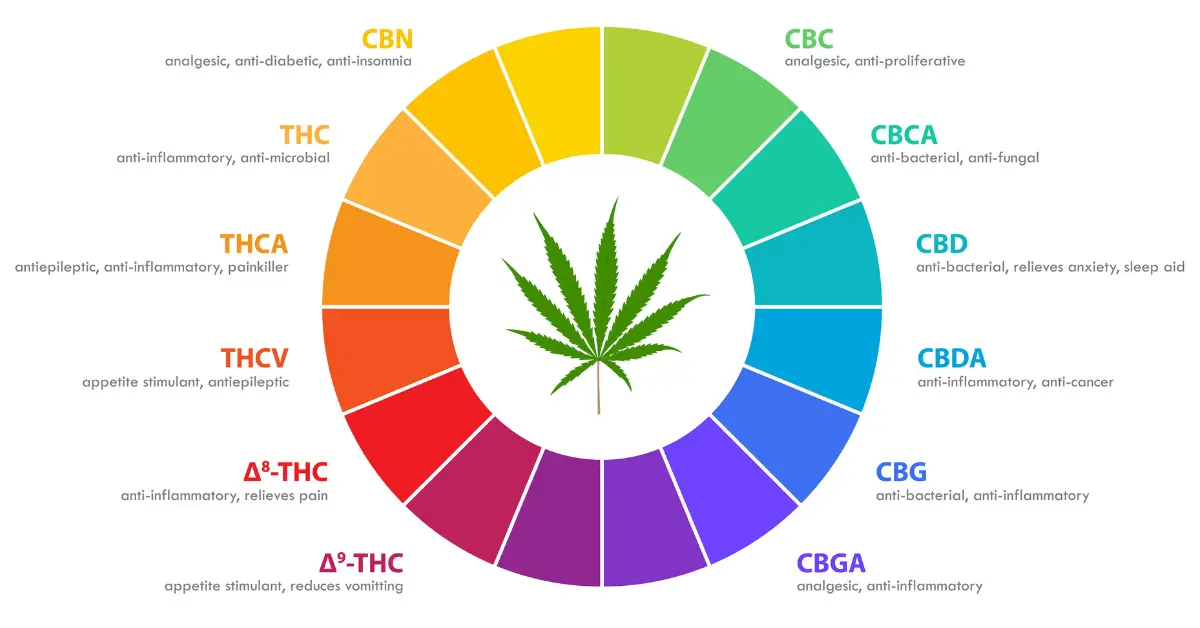
Chart comparing major and minor cannabinoids found in cannabis.
What Is a Cannabinoid?
A cannabinoid is a chemical compound that interacts with the body's endocannabinoid system. Cannabis produces them in trichomes — the sticky glands on the flower. Your body also produces its own (endocannabinoids). Plant-based cannabinoids are called phytocannabinoids, and they're what we're talking about on a dispensary lab report. For the underlying biology, see our guide to the endocannabinoid system.
The Major Cannabinoids
THC (Delta-9-Tetrahydrocannabinol)
THC is the primary psychoactive compound in cannabis. It binds strongly to CB1 receptors in the brain and produces the classic cannabis high: euphoria, altered perception, appetite stimulation, relaxation, and at higher doses, anxiety or paranoia in some people. THC is the compound most legal cannabis markets regulate, and it's the number most consumers still pay the most attention to.
CBD (Cannabidiol)
CBD is the second most abundant cannabinoid in most cannabis and the most famous non-intoxicating one. It doesn't produce a high, but it's been studied for a long list of potential benefits including anxiety reduction, anti-inflammatory effects, and seizure control — the FDA has approved a CBD-based medication, Epidiolex, for certain forms of epilepsy.
For the full comparison of these two, see our guide to THC vs. CBD.
The Minor Cannabinoids
Minor cannabinoids are "minor" only because they typically appear in smaller amounts in traditional cannabis cultivars — not because their effects are insignificant. Breeders and extractors are now producing strains and products that concentrate these compounds, and the results are opening up new categories of cannabis experience.
CBG (Cannabigerol) — "The Mother Cannabinoid"
CBG is the chemical precursor to THC, CBD, and CBC. As a cannabis plant matures, most of its CBG is converted into other cannabinoids, which is why finished flower usually contains less than 1% CBG. CBG is non-intoxicating and has been studied for its potential anti-inflammatory and neuroprotective properties.
A 2021 review in Biomedicine & Pharmacotherapy highlighted CBG's emerging role in gut health, inflammation, and bacterial resistance, though clinical data in humans is still limited (Calapai et al., 2022).
CBN (Cannabinol)
CBN is formed as THC ages and oxidizes — which is why old cannabis often has higher CBN content than fresh flower. It's only mildly psychoactive at best, and it's most commonly marketed for sleep support. The sleep claims are popular but the direct research is surprisingly thin; much of the sedating effect of "CBN for sleep" products may actually come from terpenes or residual THC in the same formulation.
THCV (Tetrahydrocannabivarin)
THCV is structurally similar to THC but behaves very differently. At low doses it appears to suppress appetite — the opposite of THC's famous "munchies" — and is sometimes marketed as "diet weed." At higher doses it can become mildly psychoactive. THCV is most often found in African landrace sativas and in specialty strains bred specifically for it.
Research is preliminary but promising. A 2020 review in Journal of Cannabis Research discussed THCV's potential role in appetite regulation and glucose metabolism (Abioye et al., 2020).
CBC (Cannabichromene)
CBC is one of the most abundant cannabinoids in young cannabis plants but one of the least discussed. It's non-intoxicating and appears to work primarily through non-cannabinoid receptors, including TRPV1, which is involved in pain and inflammation signaling.
Delta-8 and Delta-10 THC
These are close chemical cousins of regular THC (delta-9). They are psychoactive but generally described as less intense. Their legal status is complicated — they often exist in a gray area between hemp and cannabis regulations, and products vary widely in quality. Buy only from licensed dispensaries that test for purity.
Acidic vs. Neutral Forms
Every cannabinoid starts life in an acidic form with an extra carboxyl group: THCA, CBDA, CBGA, and so on. These acids are non-intoxicating and convert to their neutral, active forms (THC, CBD, CBG) through heat — a process called decarboxylation. This is why raw cannabis doesn't get you high and why edibles require the cannabis to be heated before infusion. See our guide to decarboxylation for the full science.
How Cannabinoids Work Together
The most interesting thing about cannabinoids isn't what each one does individually — it's what happens when they work together alongside terpenes. This is the entourage effect, and it's why a full-spectrum flower with modest THC can often feel more nuanced than a distillate vape with much higher THC.
How to Shop for Minor Cannabinoid Products
Look for products that list multiple cannabinoids on the lab report, not just total THC.
Try a CBG-dominant strain if you want focus without intoxication.
Experiment with CBN-forward edibles or tinctures for nighttime — but don't expect miracles, and remember the terpenes matter too.
Consider 1:1 ratios (equal THC to CBD) if you're sensitive to THC's intensity.
Both Bloom Ohio and Bloom Maryland carry products that highlight minor cannabinoids, including CBG flower and CBN-enhanced edibles and tinctures.
Frequently Asked Questions
What is the strongest cannabinoid?
THC is the most intoxicating cannabinoid in traditional cannabis. In terms of non-intoxicating effect strength, CBD is the most studied, but CBG and CBC are showing interesting potential in early research.
Will minor cannabinoids get me high?
Most won't. CBG, CBD, CBN (mostly), and CBC are non-intoxicating or only very mildly psychoactive. THCV and delta-8 can produce mild highs, especially at higher doses.
Is CBN really good for sleep?
The marketing is ahead of the science. There's some preliminary evidence for sedation, but many CBN sleep products also contain THC and terpenes like myrcene and linalool, which may be doing most of the work.
What's the difference between THCA and THC?
THCA is the raw, non-intoxicating acidic form. When you apply heat — smoking, vaping, baking — THCA converts to THC. Flower labeled with a high "THCA percentage" will become high-THC once heated.
Are minor cannabinoids legal?
It depends on the state and the specific cannabinoid. CBG and CBN are generally legal in most U.S. states. Delta-8 and THCV sit in grayer territory. In Ohio and Maryland, licensed dispensaries only sell federally and state-compliant products.
The Bottom Line
Cannabis is more than just THC and CBD. The minor cannabinoids coming to market now — CBG, CBN, THCV, CBC, and others — are expanding what cannabis can do and giving consumers more specific tools for specific goals. The next time you shop, read the full cannabinoid panel, not just the headline number. That's where the interesting products are.