What Are Trichomes? The Cannabis Plant's Powerhouse
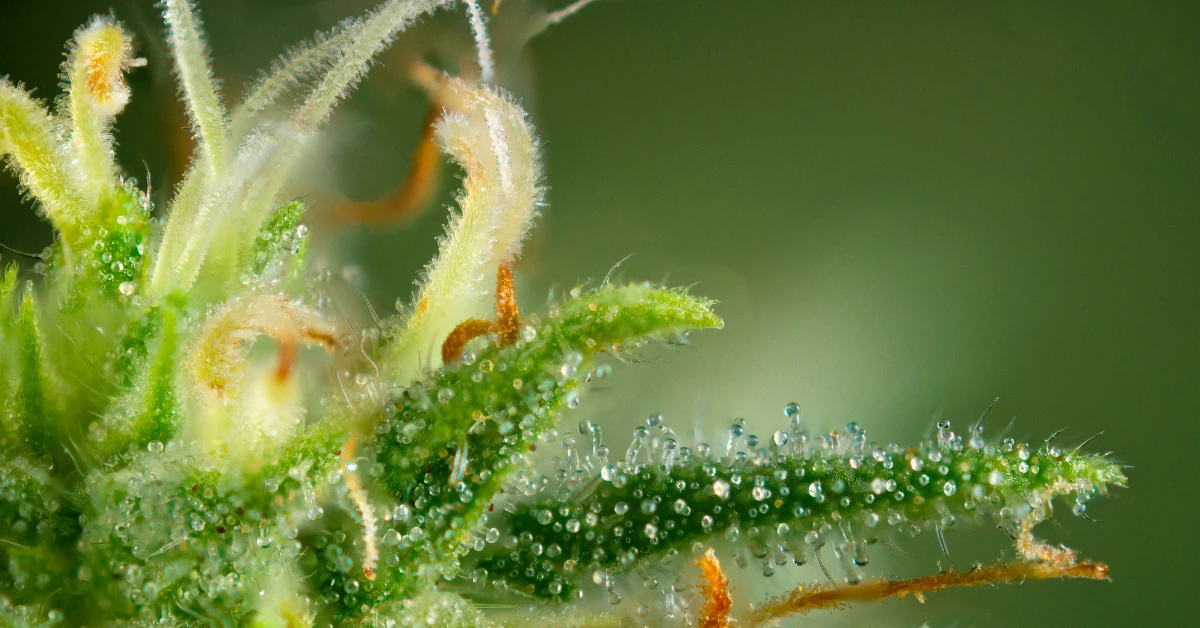
Pick up a well-grown cannabis bud and the first thing you notice is the sparkle. That frosty, crystalline coating that catches the light isn't sugar or dust — it's trichomes. Trichomes are where almost everything that makes cannabis valuable is produced: THC, CBD, the minor cannabinoids, and the terpenes that give each strain its personality. If cannabinoids are the engine of cannabis, trichomes are the factory. Understanding them will instantly change how you judge flower quality.
Trichomes, Defined
The word "trichome" comes from the Greek trichoma, meaning "growth of hair." In botany, trichomes are tiny outgrowths that appear on the surfaces of many plants — not just cannabis. They serve a variety of functions: some protect against pests, some reduce water loss, some deter herbivores with bitter or toxic chemicals. In cannabis, they've evolved into miniature chemical factories that produce the sticky, resinous compounds we collectively call cannabis "medicine."
On a cannabis plant, trichomes appear mostly on the flowers and to a lesser extent on the leaves surrounding them. They're visible to the naked eye as a white, glistening frost, but their real structure only becomes clear under magnification.
The Three Types of Cannabis Trichomes
1. Bulbous Trichomes
The smallest type, only 10–15 microns across — about the size of a few cells. You need serious magnification to see them. They appear all over the plant surface and produce small amounts of cannabinoids and terpenes.
2. Capitate-Sessile Trichomes
Medium-sized and mushroom-like in shape, but with no stalk. They're more abundant than bulbous trichomes and produce more cannabinoids per trichome.
3. Capitate-Stalked Trichomes
The largest type and the ones doing most of the heavy lifting. These are the classic "mushroom"-shaped glands visible under even a jeweler's loupe — a stalk rising from the plant surface topped with a bulbous head. They produce the majority of the plant's cannabinoids and terpenes, and they're the reason quality flower looks frosted.
What Trichomes Actually Produce
Trichomes are miniature biosynthesis labs. Inside the gland head, the plant converts basic precursors into the full range of compounds that make cannabis valuable: THCA, CBDA, CBGA, and minor cannabinoids like CBCA, along with the aromatic terpenes that shape flavor and effects. Every cannabinoid you'll ever consume started inside a trichome (Livingston et al., 2020, The Plant Journal).
For more on those compounds themselves, see our guides to major vs. minor cannabinoids and cannabis terpenes.
Why Trichomes Evolved
Trichomes aren't there to get you high. From the plant's perspective, they're a defense mechanism. The sticky resin traps insects, the strong aroma deters herbivores and attracts pollinators, and the UV-filtering compounds protect the developing seeds from sun damage. THC itself appears to have evolved as a defense chemical — unpleasant or intoxicating to insects — and the pharmacological effects on humans are essentially a fortunate accident of biology.
Reading Trichome Color for Quality and Ripeness
Trichomes change color as the plant matures, and experienced growers use that color to decide when to harvest. A magnifier or loupe (30x is the standard) is all you need to see it.
Clear trichomes: The plant is not fully mature. Cannabinoid content is still developing. Harvesting now would produce weak flower.
Cloudy / milky trichomes: Peak THC production. Most growers chasing maximum THC harvest when the majority of trichome heads are cloudy.
Amber trichomes: THC has begun to degrade into CBN, which is less psychoactive and more sedating. A mix of cloudy and amber is often preferred for more relaxing, body-heavy effects.
As a consumer shopping finished flower, you can also use trichome appearance to judge freshness. Bright, intact, glistening trichomes usually signal well-grown, well-handled cannabis. Flat, dull, or crushed trichomes often mean the flower is old, was stored badly, or was handled roughly during processing.
How to Look at Trichomes Yourself
A cheap 30–60x jeweler's loupe or a smartphone macro lens is enough to see individual trichomes clearly. Hold a bud near a bright light source, bring the loupe up to the bud surface, and focus on the tiny mushrooms on the calyxes and sugar leaves. You'll immediately see the difference between high-quality and low-quality flower.
Trichomes and Cannabis Products
Because trichomes contain most of the plant's value, many cannabis products are essentially concentrated trichomes. Hash, kief, rosin, and ice water hash are all made by physically separating trichomes from the rest of the plant material. For a deeper breakdown of how that works, see our guide to cannabis concentrates.
Trichome Care: Why Handling Matters
Trichomes are fragile. They can be damaged by heat, light, oxygen, rough handling, and friction. That's why proper storage is so important — mishandled flower can lose much of its potency and aroma even without visible mold or staleness.
Store flower in airtight glass in a cool, dark place.
Don't manhandle buds. Gently squeeze to feel texture; don't crush them.
Use a grinder that doesn't overheat. Friction from bad grinders can melt or strip trichomes.
For the full storage breakdown, see how to store cannabis.
Frequently Asked Questions
Are trichomes the same as pollen?
No. Pollen is produced by male plants for reproduction. Trichomes are resin glands produced by female plants (and to a much lesser extent on some male plants) for protection.
Does more trichome coverage mean stronger cannabis?
Usually yes, but not always. Coverage is a good proxy for potency and quality, but the actual cannabinoid and terpene content inside the trichomes is what really matters. Lab results tell the complete story.
Why are trichomes sticky?
The sticky resin is a mix of oils, waxes, and the lipid-soluble cannabinoids and terpenes themselves. This stickiness helps trap insects — part of the trichome's defensive job.
Can I eat trichomes raw to get high?
No. Raw trichomes contain THCA, not THC. Without heat to decarboxylate, you won't feel intoxicating effects — though you'll still absorb the acidic cannabinoids, which have their own non-intoxicating effects.
Why do some strains look frostier than others?
Genetics, growing conditions, and cultivation skill all play a role. Some strains are bred specifically for dense trichome production; others naturally produce less. A skilled grower can dramatically increase trichome coverage with proper light, nutrients, and environmental control.
The Bottom Line
Trichomes are where cannabis happens. Everything valuable in the plant — cannabinoids, terpenes, aroma, effects — is produced inside those tiny mushroom-shaped glands. Learning to see them, judge their color, and respect their fragility will make you better at every part of cannabis: shopping, storing, and enjoying.
Explore frosty, trichome-rich flower at Bloom Ohio or Bloom Maryland.