Cannabis Concentrates: The Complete Guide
Cannabis concentrates are exactly what they sound like: cannabis with everything but the most valuable compounds stripped away. The result is a product that can contain 60% to 90% THC and deliver a fast, powerful effect with a small dose. Concentrates have exploded in popularity over the last decade, driven by advances in extraction technology and a growing appreciation for high-terpene products like live resin and live rosin. This guide walks through what concentrates are, how they're made, and how to use them without overdoing it.
What Are Cannabis Concentrates?
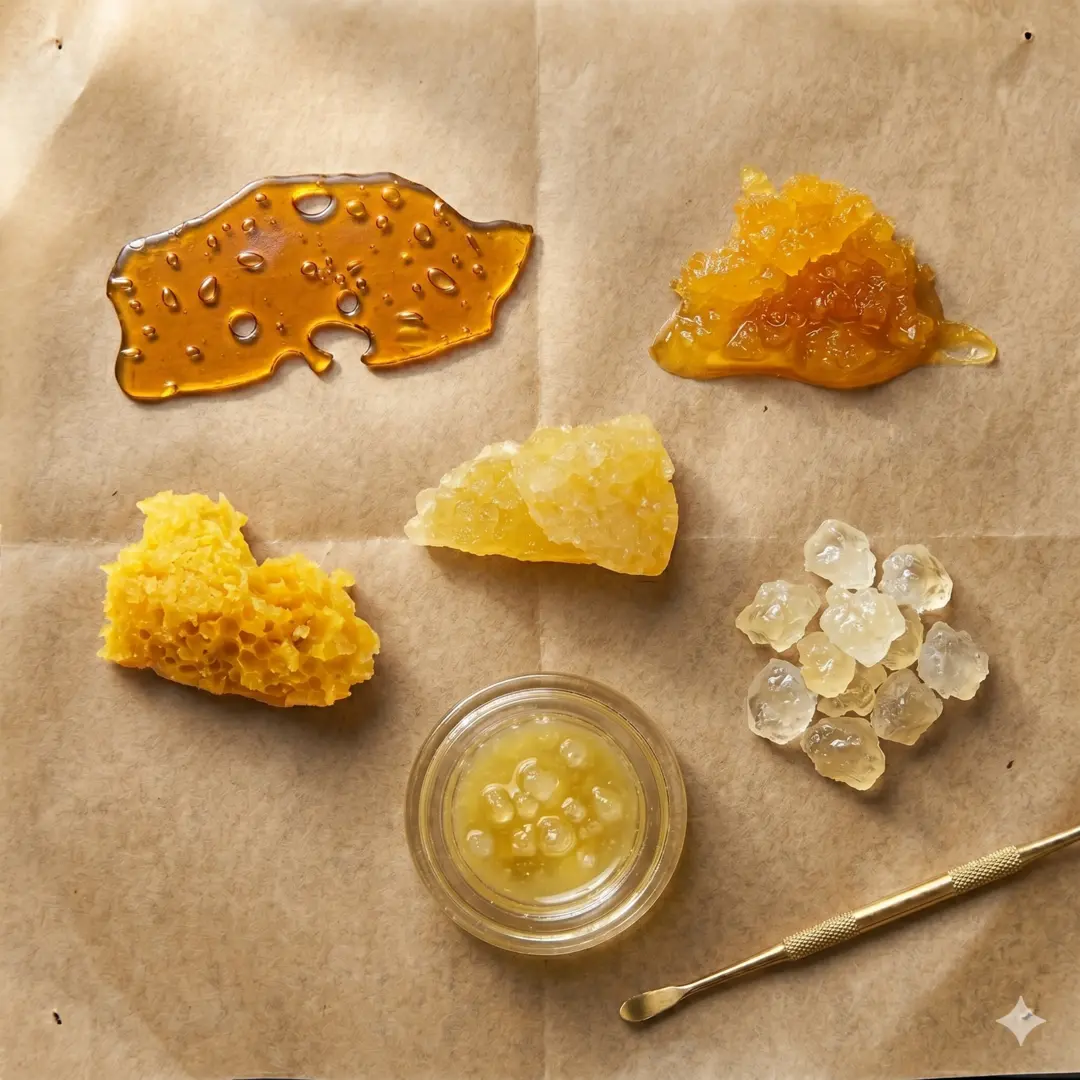
A concentrate is any product made by extracting the valuable compounds — cannabinoids and terpenes — from raw cannabis and leaving the plant material behind. All concentrates come from the same source: the trichomes on cannabis flower, where the plant produces its cannabinoids and terpenes. Different extraction methods produce different textures, potencies, and flavors.
How Concentrates Are Made
Solvent-Based Extraction
Uses a solvent — typically butane, propane, CO₂, or ethanol — to dissolve the cannabinoids and terpenes out of the plant. The solvent is then purged off, leaving behind pure extract. Solvent-based methods can produce very pure, very potent concentrates, but require careful processing and residual solvent testing.
Solventless Extraction
Uses only physical force — ice water, heat, pressure, or agitation — to separate trichomes from plant material. No chemicals, no residuals. Solventless products like ice water hash and rosin are generally considered the cleanest and most "natural" concentrates, and they often command premium prices.
The Main Types of Cannabis Concentrates
Shatter
Hard, translucent, glass-like. Breaks into pieces that look like amber shards. Made with butane extraction and purged in thin sheets. High potency (60–90% THC), long shelf life, easy to handle. Flavor is clean but can be less terpene-rich than fresh methods.
Wax / Budder
Opaque and creamy, with a texture ranging from crumbly to buttery. Made by agitating or whipping BHO (butane hash oil) during the purge. Similar potency to shatter but easier to scoop and dab.
Live Resin
Made from cannabis that was flash-frozen immediately after harvest instead of dried and cured. This preserves the terpene profile that normally degrades during drying, producing a concentrate that smells and tastes remarkably like the fresh plant. One of the most flavorful concentrates on the market.
Live Rosin
Solventless version of live resin. Starts with fresh-frozen cannabis, processed through ice water hash, then pressed with heat and pressure. No solvents at any stage. Generally considered the gold standard of cannabis concentrates — maximum flavor, maximum purity, maximum price.
Rosin
Made by applying heat and pressure directly to flower, hash, or kief. The result is a pure, solventless extract that can be produced at home with a hair-straightener-like press. Quality varies enormously.
Distillate
Highly refined extract processed to isolate cannabinoids — usually THC — to 90%+ purity. Almost all terpenes are lost during refining, so distillates are often re-infused with botanical or cannabis-derived terpenes to add flavor. Common in vape cartridges and edibles.
Hash (Hashish)
The oldest form of cannabis concentrate, made for centuries from pressed trichomes. Modern versions include dry sift, bubble hash (ice water hash), and traditional pressed hash. Potency varies from 30% to 60% THC.
Kief
Loose, powdery collection of trichomes that fall off flower during handling. The fine powder in the bottom compartment of a three-chamber grinder is kief. Sprinkle it on a bowl for a potency boost.
How to Use Cannabis Concentrates
Dabbing
Vaporizing concentrates on a heated nail or banger using a specialized water pipe called a dab rig. Produces a strong, fast-onset effect. Best for experienced users due to high potency per dose.
Electronic Rigs (E-Rigs)
Battery-powered devices that heat concentrates to precise temperatures without a torch. Easier and more consistent than traditional dabbing. Portable options exist.
Vape Cartridges
The most popular concentrate format. A cartridge filled with cannabis oil (usually distillate or live resin) attached to a battery. Convenient, discreet, and requires no extra equipment.
Adding to Flower
A small amount of kief, hash, or crumbled shatter can be added to a joint or bowl to boost potency. This is sometimes called "moon rocks" or "twaxing" depending on the method.
In Edibles
Distillates are commonly used in commercial edibles because they provide precise, flavor-neutral dosing.
Potency and Dosing
Concentrates are dramatically more potent than flower. Where a bowl of flower might contain 100–200mg of product at 20% THC, a dab of concentrate might contain 25mg of product at 80% THC — roughly the same amount of THC in a fraction of the volume.
New to concentrates? Start with a dab no bigger than a grain of rice. Really.
Work your way up slowly. You can always take more. You can't take less.
Low-temperature dabs (around 500–550°F) preserve more terpenes and produce smoother hits than high-temperature dabs.
Flavor and the Entourage Effect
Not all concentrates are equal in flavor. Distillates are nearly flavorless. Live resin and live rosin are famously aromatic. The difference is terpene content. For more on why the full chemical profile matters, see our guides to cannabis terpenes and the entourage effect.
Storage and Handling
Keep concentrates cool and dark — heat and light degrade terpenes and cannabinoids fast.
Use non-stick containers like silicone or parchment. Glass works but some concentrates stick.
Refrigerate or freeze for long-term storage. Especially live resin and live rosin, which degrade fastest.
Use a dab tool — not your fingers. Concentrates stick to skin and are hard to recover.
Frequently Asked Questions
Are concentrates dangerous?
Licensed, tested concentrates from regulated dispensaries are safe. The main risks are overconsumption due to high potency and poor-quality homemade extracts. Never attempt to make butane extracts at home — it's extremely dangerous.
What's the difference between live resin and live rosin?
Both start with fresh-frozen cannabis and emphasize terpene preservation. Live resin uses a solvent (usually butane); live rosin is solventless. Live rosin is generally considered the higher-end product but costs more.
How much more potent are concentrates than flower?
Usually 3 to 4 times more potent by weight. A 20% THC flower contains 200mg of THC per gram; an 80% concentrate contains 800mg of THC per gram.
Do I need a dab rig?
Not necessarily. Vape cartridges and e-rigs are beginner-friendly alternatives that require less equipment and skill.
Can I use concentrates in edibles?
Yes, though they need to be decarboxylated first unless they already are. See decarboxylation and cooking with cannabis for more.
Is THCA diamonds a concentrate?
Yes. THCA diamonds are crystallized THCA — up to 99% pure — and are one of the most potent concentrates available. They're usually combined with a terpene-rich "sauce" for flavor.
The Bottom Line
Cannabis concentrates are the most potent, most flavor-focused, and fastest-evolving category in cannabis. Distillates give you clean cannabinoids. Live resin and live rosin give you the full plant experience in a concentrated form. Start small, respect the potency, and explore the category — it's where some of the most exciting products in the dispensary live.
Browse concentrates, carts, and dab tools at Bloom Ohio or Bloom Maryland.