
Vaping vs. Smoking Cannabis: A Complete Comparison
Light a joint and light a dry-herb vaporizer and you're using the same plant two very different ways. Both deliver cannabinoids through your lungs, both produce rapid effects, and both have been used for thousands of years in some form. But the differences — in heat, in chemistry, in health impact, and in flavor — are bigger than most people realize. This guide lays out the honest trade-offs so you can pick the method that fits how you actually want to consume.
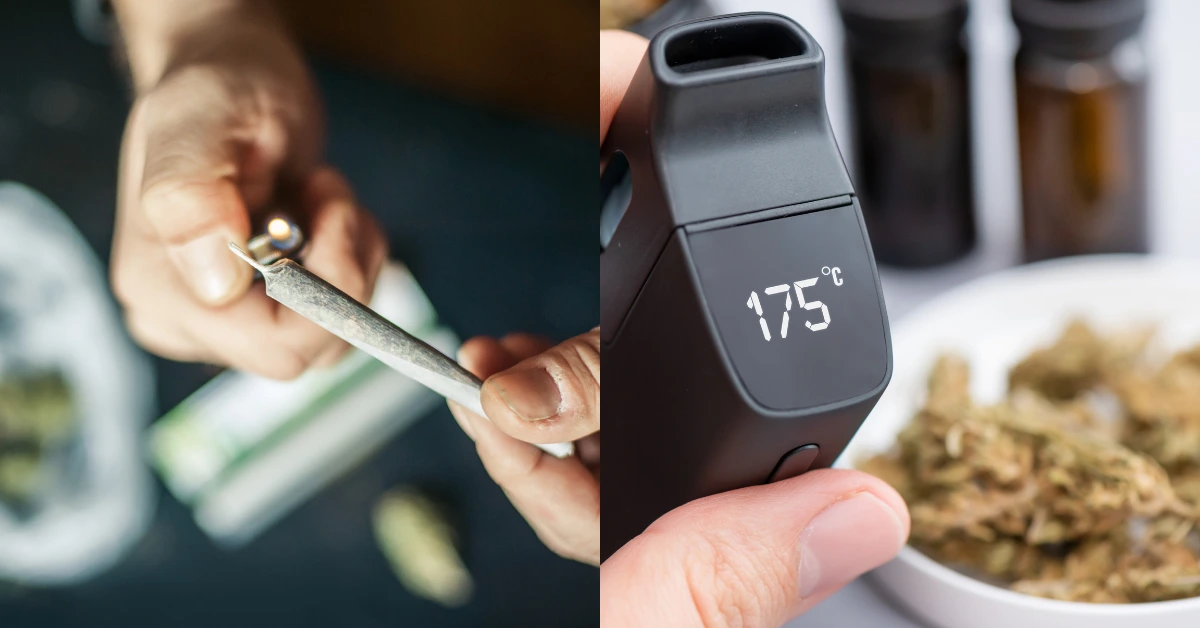
The Core Difference: Combustion vs. Vaporization
Smoking cannabis means burning it. Combustion happens at temperatures above roughly 450°F (230°C), and it creates smoke: a mixture of cannabinoids, terpenes, carbon monoxide, tar, and dozens of byproducts of incomplete burning. Vaporizing, by contrast, heats cannabis just enough to convert cannabinoids and terpenes into vapor without igniting the plant material — typically between 330°F and 430°F (166°C–221°C). No flame, no smoke, no ash.
That single difference — burning versus not burning — is the foundation of every other trade-off between the two methods.
Health Comparison: What the Research Says
Smoking cannabis is less studied than tobacco smoking, but what's known suggests that cannabis smoke contains many of the same respiratory irritants: tar, polycyclic aromatic hydrocarbons, and carbon monoxide. A 2007 study published in JAMA Internal Medicine found that switching from smoking to vaporizing significantly reduced respiratory symptoms in cannabis users without reducing effect (Earleywine & Barnwell, 2007).
A 2015 study in Clinical Pharmacology & Therapeutics compared blood cannabinoid levels and subjective effects between smoking and vaporizing and found vaporization delivered similar or higher cannabinoid levels per dose (Abrams et al., 2007).
That said, vaporizing is not risk-free. Lung irritation is still possible, and the 2019 EVALI (e-cigarette and vaping-associated lung injury) outbreak showed that low-quality vape cartridges — specifically those containing vitamin E acetate — can cause severe lung damage. Stick to tested, licensed products only.
Flavor and Terpene Preservation
Terpenes are delicate and start evaporating at relatively low temperatures. The combustion heat of smoking destroys a significant portion of a strain's terpenes almost instantly, which is why smoke tastes more like "burning plant" and less like the specific aromas a fresh bud has. Vaporizing at low temperatures — 330°F to 380°F — preserves many of those terpenes, and you can actually taste the difference in strain-specific character. For a deeper dive into what terpenes do, see our cannabis terpenes guide.
Potency and Efficiency
Vaporizers are generally more efficient. Research has suggested that vaporizing converts more of the cannabis's available THC into inhalable vapor than combustion, which loses a meaningful percentage to side-stream smoke and pyrolysis. In practice, this means you often need less flower to reach the same effect with a vaporizer.
Smoking, however, tends to produce a faster, more intense peak — because combustion releases everything at once. Vaporizing often feels smoother and more controlled, which some users prefer and others find underwhelming.
Types of Vaporizers
Dry Herb Vaporizers
Heat ground cannabis flower directly. They range from pocket-sized portables to high-end desktop units with precision temperature control. Best for flavor and control. A quality dry herb vape is the closest thing to "drinking" a strain — you taste every terpene.
Vape Cartridges
Pre-filled with cannabis oil and screwed onto a battery. Convenient, discreet, and fast. Quality varies widely; look for live resin or live rosin carts to get the fullest terpene profile. Avoid unlicensed carts at all costs.
Dab Rigs and E-Rigs
Used for vaporizing cannabis concentrates like wax, shatter, and rosin. Delivers high-potency hits and is best for experienced consumers. See our cannabis concentrates guide for more.
Ways to Smoke Cannabis
Joints: Rolled with thin paper. Classic, portable, social.
Blunts: Rolled in tobacco leaf wraps. Larger, stronger flavor, contain nicotine.
Pipes and bowls: Quick, no rolling required, small doses.
Bongs: Water filtration cools and smooths smoke, larger hits.
Pre-rolls: Commercially rolled joints.
For more on pre-rolls specifically, see our cannabis pre-rolls guide.
Cost Comparison
Smoking requires almost nothing to start — papers, a lighter, and flower. Dry herb vaporizers have a higher upfront cost ($50–$300+) but can pay for themselves over time through more efficient flower use. Disposable vape cartridges are a middle path: low initial cost, higher per-dose cost than flower.
Discretion and Lifestyle
Vaping produces less odor, dissipates faster, and is more discreet.
Smoking produces strong, lingering odor that sticks to clothes, hair, and fabric.
For people living in apartments, traveling, or sharing space with non-consumers, vaping is almost always the better choice.
Which Should You Choose?
Here's a quick decision framework:
Choose vaping if: you care about lung health, flavor, discretion, or getting the most from your flower.
Choose smoking if: you prefer tradition, ritual, the fast peak, or can't justify the upfront cost of a quality vaporizer.
Try both. Many consumers use both methods depending on context — smoking for social occasions, vaping for home.
Frequently Asked Questions
Is vaping cannabis actually safer than smoking?
Current research suggests significantly fewer respiratory irritants and byproducts than combustion. It's not zero-risk, but the evidence consistently points toward vaping being easier on the lungs than smoking.
Do vaporizers get you as high as smoking?
Yes. In some cases higher, because vaporizers are more efficient. The onset and peak feel slightly different — smoother, more gradual — but the cannabinoid delivery is comparable or better.
What temperature should I vape cannabis at?
It depends on what you want. Lower temperatures (330–360°F) preserve more terpenes and produce lighter, flavor-forward effects. Higher temperatures (380–430°F) extract more cannabinoids per hit and produce stronger, more sedating effects.
Are vape carts safe?
Licensed, tested vape cartridges from regulated dispensaries are generally safe. Unlicensed carts — especially those bought on the illicit market — have been linked to serious lung injury. Always buy from a licensed dispensary.
Does vaping smell less than smoking?
Yes, significantly. The smell from vaporizing is lighter, more aromatic (it actually smells like the strain), and dissipates much faster than smoke. Still noticeable in the moment, but gone within minutes.
Can I vape the same flower multiple times?
Yes — and the leftover "already vaped" flower (AVB) still contains residual cannabinoids. Some people use it to make edibles, though potency is lower and variable.
The Bottom Line
Vaping is the smarter choice for most modern cannabis consumers: better flavor, more efficient use of flower, and significantly reduced respiratory impact compared to smoking. Smoking still has its place for tradition, speed, and social ritual. If you've never tried a quality dry herb vaporizer, it's one of the single biggest upgrades you can make to your cannabis experience.
Browse flower, vape cartridges, and accessories at Bloom Ohio or Bloom Maryland.