What Is THCa? The Raw Cannabinoid Behind Your Flower's THC

THCa is the raw, non-intoxicating form of THC found in fresh cannabis. On its own, it won't get you high. It only becomes the THC people are after once heat is applied — when you light a joint, hit a vape, or bake it into an edible.

That single fact explains a lot of small mysteries: why eating raw flower doesn't do much, why your flower label leads with a "THCa" number, and why "THCa flower" sold online is marketed as legal hemp. This guide walks through what THCa actually is, how it converts into THC, and what those label percentages really mean — using a real lab report from flower we carry.
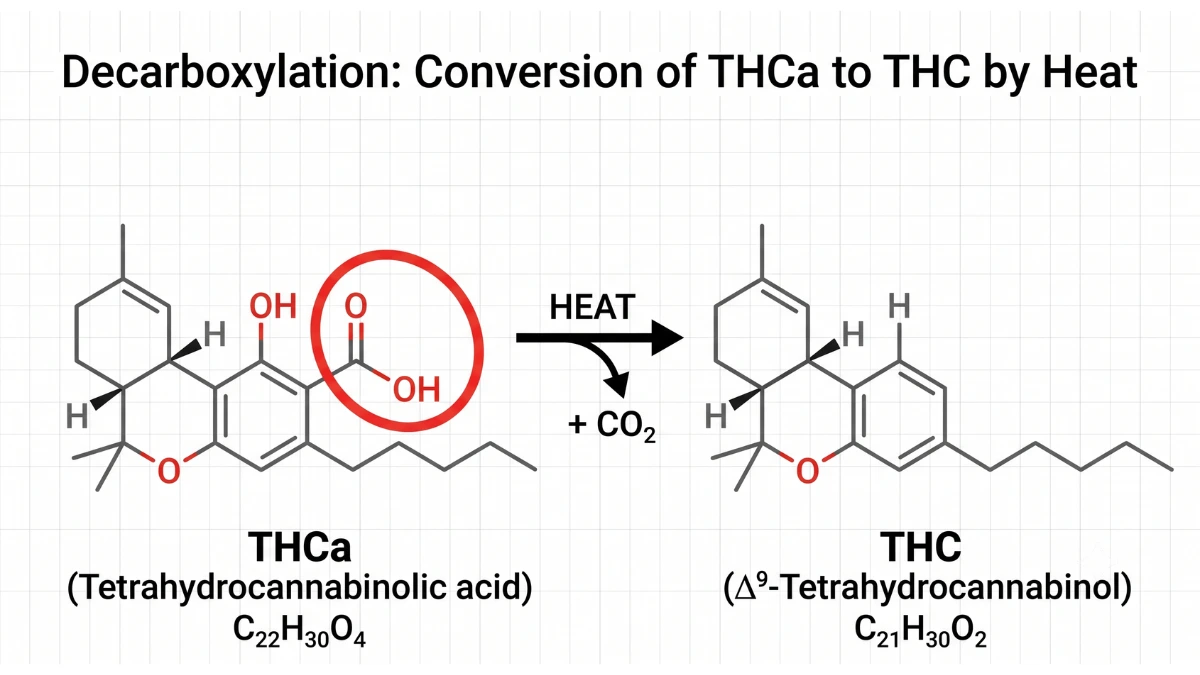
Molecular diagram comparing THCa and THC, showing the carboxyl group that heat removes to convert THCa into THC.

What is THCa?

THCa, or tetrahydrocannabinolic acid, is the acidic compound that a living cannabis plant actually produces. Here's the part that surprises people: the plant doesn't make much THC at all. It makes THCa. Inside the growing plant, an enzyme called THCa synthase builds THCa from an earlier compound (CBGA), and that THCa sits in the flower until something converts it.

Raw cannabis is full of these acidic cannabinoids, not their "active" versions. You can see it on a real lab report. A recent test of our Wedding Cake flower showed not just THCa, but also THCVA and CBGA — all acid forms — sitting alongside only a trace of already-converted delta-9 THC. That's the natural state of fresh flower: loaded with potential, not yet activated.

In its raw, acidic form, THCa is non-intoxicating. It doesn't produce the head high cannabis is known for. To understand why, it helps to put it next to THC.

THCa vs. THC: what's actually different?

THCa and THC are nearly identical molecules. The difference is one part: THCa carries an extra carboxyl group (a cluster of carbon, oxygen, and hydrogen) that THC doesn't have.

That small addition changes the shape and size of the molecule, and shape is everything here. The "high" from cannabis happens when THC fits into CB1 receptors in your brain — part of your endocannabinoid system. THC slots into those receptors cleanly. THCa, with its extra group and bulkier shape, doesn't fit them the same way, so it doesn't trigger the same intoxicating response. Same origin, one structural difference, completely different experience.

People also search for "THCa vs. delta-9." Delta-9 THC is simply the specific, technical name for the main THC in cannabis — so "THCa vs. THC" and "THCa vs. delta-9" are really asking the same question. THCa is the raw precursor; delta-9 THC is the activated, intoxicating result.

THCa is one of dozens of compounds in the plant. If you want the bigger picture of how these fit together, see our guides to major vs. minor cannabinoids and THC vs. CBD.

Does THCa get you high?

Not in its raw form. If you ate a piece of fresh, unheated flower, you would not feel the typical cannabis high, because the THCa hasn't been converted to THC yet. This is exactly why people who juice raw cannabis leaves or eat raw flower don't report feeling intoxicated the way they would after smoking.

So the honest answer to "if I eat raw flower, will I still get high?" is no — not the way you're expecting. Raw flower is mostly THCa, and THCa needs to be activated first. Without heat (or a lot of time), it stays in its non-intoxicating form. The next section covers how that activation works.

How THCa turns into THC

The conversion is called decarboxylation — heat, light, or time removing that extra carboxyl group and leaving behind THC. It happens automatically every time you use cannabis the usual ways: smoking and vaping apply heat instantly, and baking flower into an edible decarbs it in the oven.

That's the short version. For the full breakdown of temperatures, timing, and how to decarb at home, see our dedicated guide to decarboxylation.

Why your flower label says THCa, not THC

This is one of the most common questions budtenders get: why does the label lead with a THCa number instead of THC?

Because the lab is measuring the flower as it sits in the jar — raw and unheated — where THCa is the dominant compound and very little THC has formed yet. Look at the real numbers from that Wedding Cake test:

  • THCa: 21.2%

  • Delta-9 THC: 1.67%

  • Total THC: 20.3%

At a glance that looks contradictory. How is "Total THC" lower than the THCa figure? The answer is a conversion factor: 0.877.

When THCa decarboxylates, it sheds that carboxyl group as carbon dioxide. Carbon dioxide has weight, so the THC left behind weighs about 87.7% of the THCa you started with. To estimate the most THC a flower can deliver, labs use this formula:

Total THC = (THCa × 0.877) + delta-9 THC

Run the Wedding Cake numbers and it lines up exactly: 21.2 × 0.877 = 18.6, plus the 1.67 already there, equals about 20.3%. That "Total THC" figure is the realistic ceiling — what you'd get if every bit of THCa converted perfectly.

The practical takeaway: a "21% THCa" label doesn't mean 21% of the bag is active, ready-to-feel THC. It means the flower has the potential to deliver roughly 20% THC once you heat it. Knowing that one number — and where it comes from — makes every menu in the store easier to read.
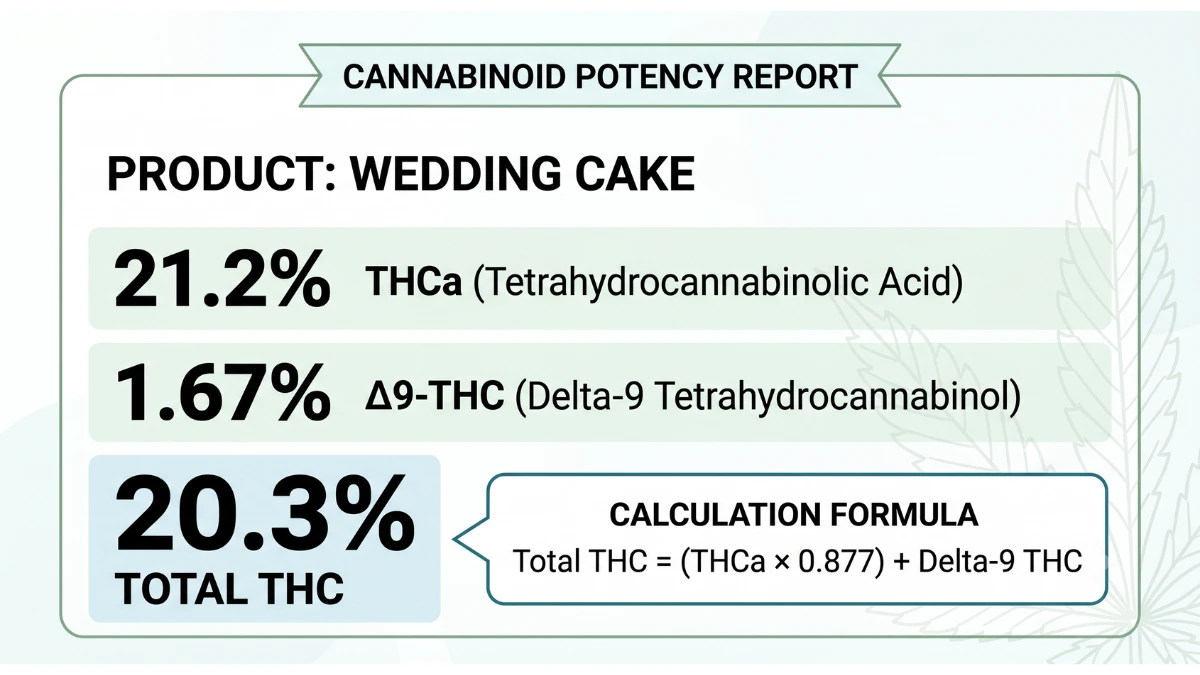
Cannabis potency label showing THCa at 21.2 percent, delta-9 THC at 1.67 percent, and total THC at 20.3 percent, with the total THC conversion formula.

THCa diamonds and concentrates

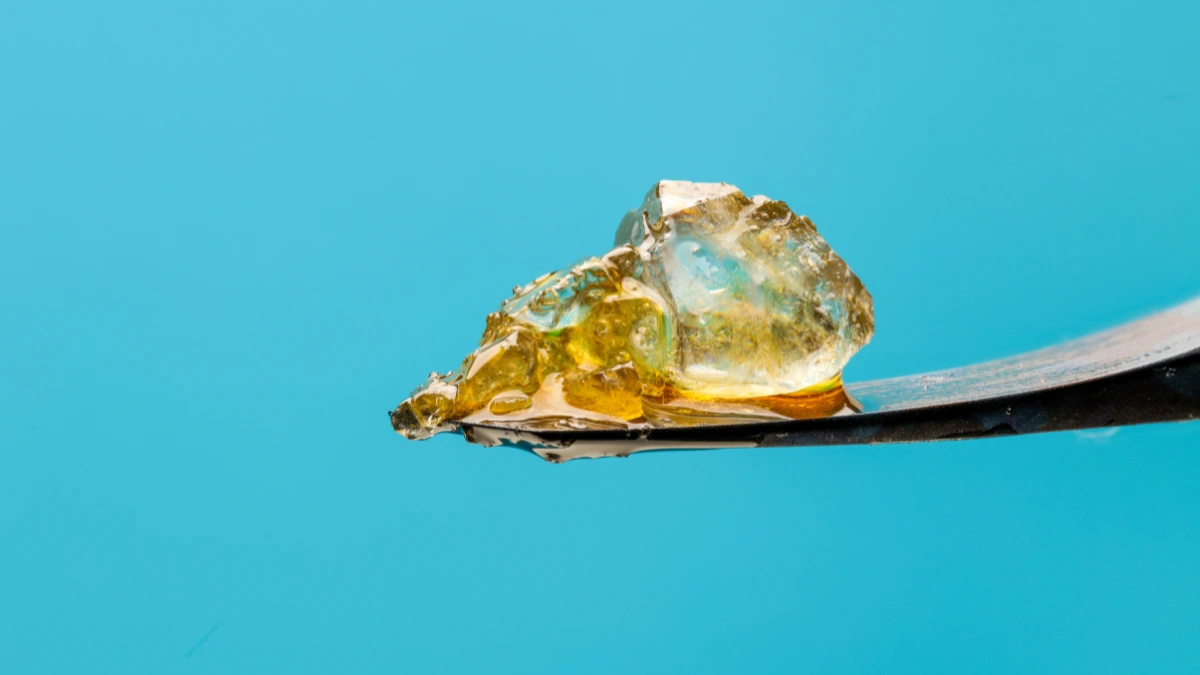
If raw flower is THCa in its natural, low-key form, THCa diamonds are the opposite extreme. Diamonds are crystalline structures of nearly pure THCa — the most concentrated form of THCa you'll see on a dispensary menu, often testing well above 90%. They look like literal crystals, and that's mostly isolated THCa.

Like the THCa in flower, diamonds aren't doing much until you heat them. Dab them or hit them in a vape, and that intense heat decarbs the THCa into THC almost instantly — which is why concentrates feel so strong. They're a great illustration of the whole concept: a product can be "all THCa" on paper and still depend entirely on heat to do anything.

Concentrates like diamonds, sauce, and rosin are a serious category for our customers, not a novelty — they move steadily off our shelves every month. If you're newer to them, our overview of cannabis concentrates is a good starting point.

Close-up of crystalline THCa diamonds, a highly concentrated cannabis extract.

"THCa flower" sold online vs. what's on a dispensary shelf

Here's a question we hear a lot: is the "THCa flower" I bought online or at a hemp shop the same thing you sell?

Chemically, the flower itself is very similar. The difference is the rules it's sold under — and how it's tested.

"THCa flower" sold online is typically marketed as federally legal hemp. The logic is a technicality: federal hemp rules measure delta-9 THC by dry weight, and freshly cured flower is naturally low in delta-9 (remember, it's mostly THCa). So a flower can test "low THC" on paper while being packed with THCa. But the moment you smoke it, that THCa decarbs into THC — and you're inhaling something that behaves like ordinary high-THC cannabis. The "low-THC hemp" framing describes the flower in the bag, not what reaches your lungs.

This is the same regulatory gray area that fueled the delta-8 THC market, and it's narrowing. Federal legislation signed in late 2025 (P.L. 119-37) is set to close much of this hemp-cannabinoid loophole, with changes phasing in through late 2026. [Source: link to P.L. 119-37 / authoritative coverage] Where these products stand legally is changing and varies by state, so check your local laws rather than assuming.

The bigger practical difference is testing and oversight. The Wedding Cake report behind this article isn't just a potency number — that same flower was tested by an independent, accredited lab and passed screening for heavy metals, pesticides, microbials, and mycotoxins. In a licensed, regulated market, that testing is the baseline, and the results follow the product. Unregulated "THCa flower" ordered online may carry a potency claim with little independent verification of what else is in it. When you can't see a full panel, you're trusting the seller's word.

None of this is a knock on the plant — it's the same cannabis either way. It's about knowing whether someone has actually checked what's in the jar.

Is THCa legal?

The legal status of THCa is genuinely murky, and it depends heavily on where you are.

At the federal level, the ambiguity traces back to how hemp is defined — by delta-9 THC content rather than total THC. That gap is what let high-THCa "hemp" products reach the market in the first place. As noted above, federal law is shifting to narrow that gap, and many states have written their own rules on top of it. The result is a patchwork: what's permitted in one state may not be in the next, and it's actively changing.

Because this is a jurisdiction-by-jurisdiction question, the only reliable answer is to check the rules where you live. If you're in one of our states, start here:

Frequently asked questions

Why does my flower label say THCa instead of THC? Because the lab measures raw, unheated flower, where THCa is the dominant compound. The label often also lists a "Total THC" figure, which estimates how much THC the flower can produce once heated, using the formula (THCa × 0.877) + delta-9 THC.

Is the THCa flower I bought online the same as what's at a dispensary? The flower is chemically similar, but it's sold and tested differently. Online "THCa flower" is usually marketed as hemp because it tests low in delta-9 THC, even though it's high in THCa that converts to THC when smoked. Dispensary flower in a regulated market comes with full lab testing for contaminants, not just a potency claim.

If I eat raw cannabis, will I get high? No, not in the usual sense. Raw flower is mostly THCa, which is non-intoxicating until heat converts it to THC. Eating or juicing raw cannabis won't produce the typical high.

Is THCa stronger than THC? It's not really a "stronger vs. weaker" comparison. Raw THCa doesn't get you high at all; THC does. Once THCa is heated and converts to THC, its strength is just the strength of the THC it became.

Does THCa show up on a drug test? Drug tests look for THC and its metabolites, not THCa itself. But because THCa readily converts to THC — including from smoking or vaping any THCa product — using these products can absolutely lead to a positive test. Treat THCa products as you would any THC product where testing is a concern.

This article is for informational purposes only and is not medical advice. Cannabis affects individuals differently. Consult a qualified healthcare provider before using cannabis, especially if you have a medical condition, are pregnant or breastfeeding, or take prescription medications. Cannabis laws and available products vary by state — check your local regulations. Do not drive or operate machinery while using cannabis. Keep cannabis products out of reach of children and pets.