
Cannabis and Sleep: What the Science Actually Says
Cannabis and sleep have a long, complicated relationship. Millions of people use cannabis to fall asleep, and many report real benefits. But the research is more nuanced than marketing makes it sound, and long-term heavy use can actually disrupt sleep architecture in ways most consumers don't realize. This guide walks through the real science, the right products to consider, and the trade-offs to be aware of — so you can use cannabis for sleep effectively without creating new problems.
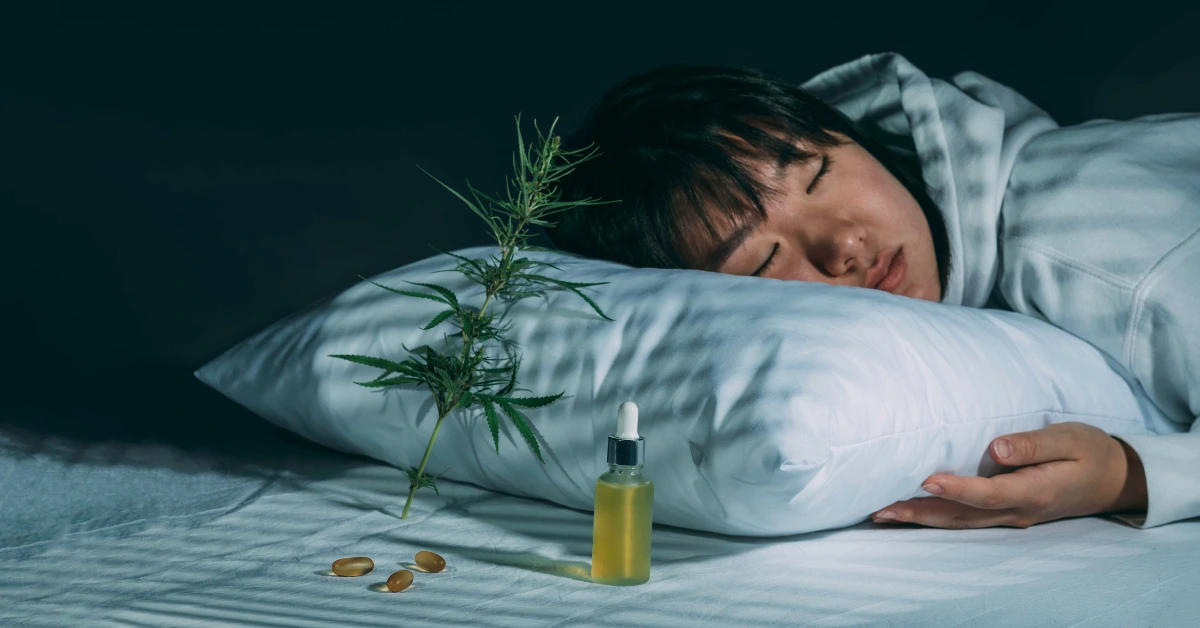
Does Cannabis Actually Help with Sleep?
Yes — and also, it's complicated. A 2022 review in Experimental and Clinical Psychopharmacology analyzed dozens of studies and concluded that cannabis, particularly higher-THC products, does help many users fall asleep faster and stay asleep longer in the short term. But chronic heavy use was associated with disrupted sleep architecture and difficulty sleeping without cannabis (Babson et al., 2017).
The short version: cannabis can be an effective sleep aid, especially for people struggling with stress, anxiety, or pain that's keeping them awake. But regular nightly use can create tolerance and dependence, and may affect REM sleep — which is important for memory consolidation and emotional processing.
How Cannabis Affects Sleep
Cannabis interacts with sleep in several ways:
Reducing Time to Fall Asleep
THC has been shown to reduce sleep onset latency — the time it takes to fall asleep — in multiple studies. For people whose main sleep complaint is "I can't turn my mind off," this effect is usually noticeable and welcome.
Suppressing REM Sleep
One of the most consistent findings in cannabis sleep research is that THC suppresses REM sleep, the phase associated with vivid dreaming. Many users notice they stop remembering their dreams on cannabis — that's REM suppression in action. This is why people who stop using cannabis after regular use often experience unusually vivid or disturbing dreams as REM "rebounds."
Increasing Slow-Wave Sleep
Some research suggests cannabis, particularly at lower doses, can increase slow-wave sleep — the deep, physically restorative phase of sleep. This is part of why some users wake up feeling well-rested after cannabis-aided sleep.
Reducing Sleep Disruptions
Cannabis may help people with conditions that disrupt sleep — chronic pain, PTSD nightmares, anxiety — stay asleep longer by addressing the underlying cause of the disruption.
Best Cannabinoids for Sleep
THC
The most studied cannabinoid for sleep. Effective for falling asleep faster, but REM suppression is a real cost. Low to moderate doses (2.5–10mg for edibles) tend to be more effective than high doses, which can actually disrupt sleep.
CBD
More complicated. Low doses of CBD can be mildly alerting for some users; higher doses may support sleep by reducing anxiety. CBD doesn't suppress REM like THC does, which is a meaningful advantage.
CBN
Marketed heavily as "the sleep cannabinoid." The science is thinner than the marketing suggests. CBN forms as THC ages and oxidizes, and it was once thought to be strongly sedating, but recent research hasn't confirmed the potency of these claims. Much of the apparent sleep benefit from CBN products may come from the THC and terpenes that usually accompany it. For more, see major vs minor cannabinoids.
Combinations
1:1 or 2:1 CBD:THC ratios are often recommended for sleep because they combine sleep onset help from THC with the calming, less-intoxicating effects of CBD.
Best Terpenes for Sleep
Terpenes may matter as much as cannabinoids for sleep effects. Three terpenes consistently show up in "sleep strains":
Myrcene — the most abundant terpene in most sedating strains. Strong association with couch-lock effects.
Linalool — the main terpene in lavender, long associated with relaxation and sleep.
Caryophyllene — calming without sedation, good for stress-related insomnia.
For more on individual terpenes, see our cannabis terpenes guide.
Best Cannabis Products for Sleep
Edibles
Edibles are a strong choice for sleep because they produce longer-lasting effects. A 5–10mg edible taken 60–90 minutes before bed can help you fall asleep and stay asleep. The downside is the "edible hangover" — morning grogginess that some users experience after higher doses. See our cannabis edibles guide.
Tinctures
Great for precise dosing and faster onset than edibles. A sublingual tincture kicks in within 15–45 minutes, making timing easier. See cannabis tinctures.
Flower or Vaping
Fast onset, short duration. Good for falling asleep but may wear off in the middle of the night, leading to early waking. Better as a supplement to a tincture or edible than as the sole sleep tool.
CBN-Forward Products
Marketed specifically for sleep. Results are variable — some users swear by them, others notice no particular advantage over standard THC products. Worth trying if standard options aren't working.
How to Use Cannabis for Sleep Effectively
Start with a low dose. 2.5–5mg THC is often enough for sleep purposes. Higher doses can actually disrupt sleep later in the night.
Time it right. Take edibles 60–90 minutes before bed. Take tinctures 30–45 minutes before bed. Smoke or vape 15–30 minutes before bed.
Consider 1:1 or CBD-dominant ratios if pure THC makes you feel too "heavy" the next morning.
Don't combine with alcohol. Alcohol disrupts sleep quality and compounds grogginess.
Build good sleep hygiene. Cannabis works better alongside regular bedtimes, low light, and low screen use before bed — not as a replacement for them.
Take periodic breaks. Tolerance breaks every few weeks help prevent dependence and preserve effectiveness.
The Trade-Offs to Know About
REM Suppression
THC reduces REM sleep. For most people in the short term, this isn't noticeable or problematic. For long-term heavy users, it may affect memory, mood, and emotional processing. Periodic tolerance breaks may help restore normal REM.
Tolerance and Dependence
Cannabis tolerance for sleep purposes develops relatively quickly. Within a few weeks of nightly use, many people find they need more cannabis for the same effect, or have difficulty sleeping without it. This isn't physical addiction in the opioid sense, but it can become psychological dependence that's hard to break.
Morning Grogginess
Higher doses, particularly of edibles, can leave a residual fog the next morning. Lowering the dose usually resolves this.
REM Rebound on Withdrawal
When regular users stop cannabis, they often experience unusually vivid or unpleasant dreams for 1–2 weeks as REM sleep rebounds. This is uncomfortable but not dangerous, and it resolves on its own.
When Cannabis Isn't the Right Sleep Tool
Cannabis isn't a universal sleep solution. Consider other approaches if:
Your insomnia is chronic or severe — a doctor can rule out sleep apnea, restless leg syndrome, or other treatable conditions.
You have a history of THC-induced anxiety — cannabis may make your bedtime experience worse.
You're taking medications that interact with cannabinoids.
Your sleep issues are rooted in mental health — cannabis can help short-term but isn't a substitute for appropriate care.
Frequently Asked Questions
Is indica or sativa better for sleep?
Strains high in myrcene and linalool tend to be more sedating, and many are labeled indica — but the label is less important than the terpene profile. See sativa vs indica vs hybrid.
Is CBN really better than THC for sleep?
Marketing says yes; the science is inconclusive. Most CBN sleep products also contain THC and terpenes that may be doing most of the work.
How much cannabis should I take for sleep?
For most people, 2.5–10mg of THC is enough. Higher doses can disrupt sleep quality later in the night and cause next-day grogginess.
Can you become dependent on cannabis for sleep?
Yes, psychologically. Regular nightly use can make it difficult to sleep without cannabis, which is a form of dependence. Periodic breaks help.
Does cannabis affect sleep quality or just help you fall asleep?
Both, and sometimes in opposite directions. It can help you fall asleep faster and increase deep sleep, but suppresses REM. Net effect depends on dose, frequency, and individual response.
Will cannabis help with sleep apnea?
Research is mixed, and cannabis is not an approved treatment for sleep apnea. If you suspect sleep apnea, see a doctor for proper diagnosis.
The Bottom Line
Cannabis can be an effective short-term sleep aid, especially for stress- and pain-related sleep problems. A low dose of a myrcene-rich, THC-forward product taken an hour before bed helps many people fall asleep faster and stay asleep longer. The main trade-offs are REM suppression, tolerance buildup, and the risk of psychological dependence — all of which are manageable with thoughtful use and periodic breaks. For chronic sleep issues, talk to a doctor.
This guide is for educational purposes and is not medical advice. If you're dealing with persistent sleep problems, please talk to a healthcare provider.
Browse sleep-supporting products at Bloom Ohio or Bloom Maryland.