
Sativa vs. Indica vs. Hybrid: What the Labels Really Mean
Walk into any dispensary and the menu will be split into three columns: sativa, indica, and hybrid. Ask the budtender and you'll hear the classic shorthand — sativa is energizing, indica is relaxing, hybrid is somewhere in between. It's a useful starting point, but it's also oversimplified to the point of being misleading. The truth is more interesting, and understanding it will make you a much better cannabis shopper.
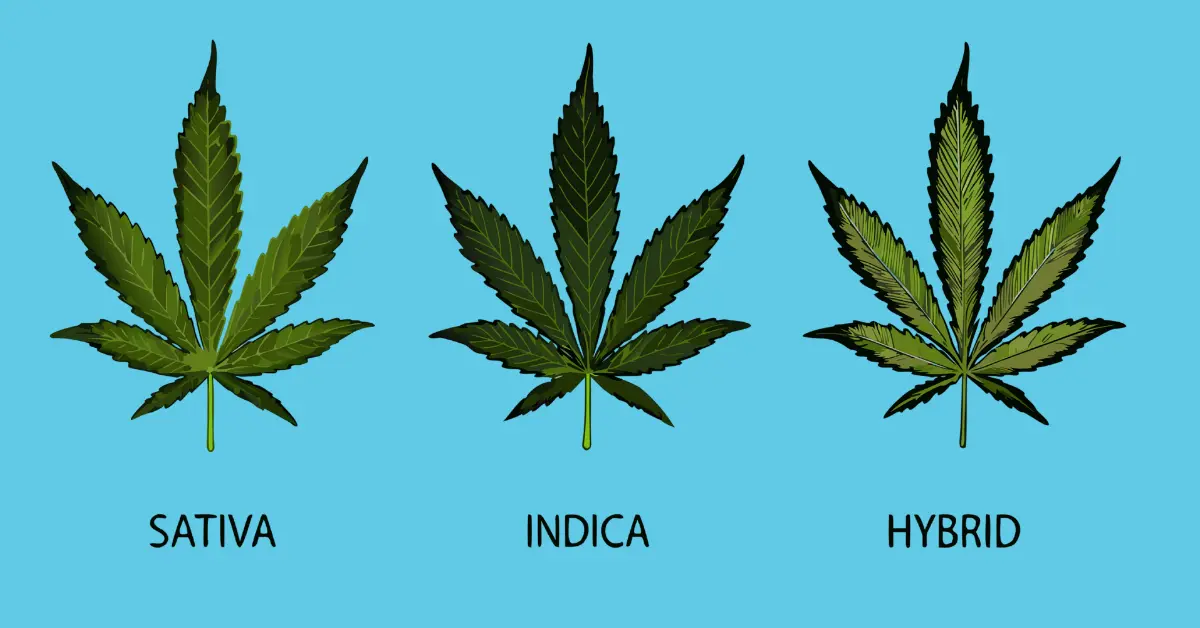
Where the Sativa vs. Indica Labels Came From
The words sativa and indica originally described the botanical shape of two different cannabis plants. Cannabis sativa, first named in 1753, describes tall plants with narrow leaves that grow in equatorial regions. Cannabis indica, named in 1785, describes shorter, bushier plants with broad leaves native to regions like the Hindu Kush mountains.
Those labels were strictly about how the plant looks in the field — not about how it makes you feel. Over the last few decades, the cannabis industry adopted the terms as shorthand for effects: sativa for "up," indica for "down." But modern genetics tells a different story.
Why the Labels Don't Predict Effects Anymore
A 2021 study in the journal PLOS ONE analyzed the chemistry of nearly 90 cannabis samples and found that the sativa/indica labels had almost no correlation with the actual chemical profiles of the plants (Smith et al., 2022, PLOS ONE). Two strains labeled "sativa" could be chemically more similar to an "indica" than to each other.
Decades of cross-breeding have mixed the genetics so thoroughly that pure sativa or pure indica strains are rare. Almost everything on a modern dispensary menu is technically a hybrid. The labels have become a marketing convention more than a scientific classification.
What Actually Determines How a Strain Feels
If the labels don't predict effects, what does? Three things:
1. Cannabinoid content
The ratio of THC to CBD and the presence of minor cannabinoids like CBG, CBN, and THCV all shape the experience. For a full breakdown, see our guide to major vs. minor cannabinoids.
2. Terpene profile
Aromatic compounds like myrcene, limonene, and caryophyllene influence whether a strain feels relaxing, uplifting, or focused. See our cannabis terpenes guide for the full list.
3. Your own body chemistry
Your endocannabinoid system, tolerance, set and setting, and even what you ate that day all affect how a strain lands. For more, see our guide to the endocannabinoid system.
How to Use the Labels Without Being Misled
The sativa/indica/hybrid labels aren't worthless. They're useful as a rough first filter — especially if you've historically responded well to one category. But they shouldn't be the last thing you check.
Use the label as a starting point, not a final answer.
Check the terpene profile on the lab report. If it's high in myrcene and linalool, expect sedation regardless of the label.
Look at THC and CBD percentages. A high-CBD "sativa" will feel nothing like a high-THC one.
Ask the budtender how the strain lands for actual customers, not what the label says.
Common Assumptions (and What the Science Says)
"Indica means in-da-couch"
The rhyme is catchy but not reliable. Sedation is more closely linked to high myrcene content than to the indica label. Many "indicas" on the market today are high in myrcene, which is probably why the stereotype persists.
"Sativas are for daytime"
Some are. Others are relaxing. The strains most commonly associated with alertness tend to be high in terpinolene, limonene, or pinene — which can show up in any category.
"Hybrids are balanced"
Not necessarily. A hybrid can lean heavily in either direction. The word just means the strain's lineage includes parents from both sides.
A Smarter Way to Shop
Instead of starting with the label, start with how you want to feel. Want to wind down before bed? Ask for strains high in myrcene or linalool. Want energy for a hike? Ask for something high in limonene or pinene. Want relief without a heavy body effect? Look for caryophyllene-dominant options.
Both Bloom Ohio and Bloom Maryland stock flower with full lab panels, so you can shop by profile instead of just by label.
Frequently Asked Questions
Is indica really better for sleep than sativa?
Not reliably. Strains high in myrcene and linalool tend to be more sedating, and many indica-labeled strains are high in those terpenes — but it's the chemistry doing the work, not the label itself.
What is a hybrid strain?
A hybrid is any cannabis strain whose genetics include both sativa and indica lineage. In practice, that's the vast majority of modern cannabis. Hybrids can lean sativa, lean indica, or sit in the middle.
Why do dispensaries still use the labels if they're not accurate?
Because customers have been trained to expect them, and they're useful shorthand. The industry is slowly shifting toward labeling by chemotype — the chemical fingerprint of the strain — but that shift will take years.
Is there a real difference between sativa and indica plants?
Botanically, yes. The plants themselves look and grow differently. But the chemical and experiential differences have largely blurred through decades of hybridization.
What's the best label for beginners?
None of them, honestly. Beginners are better served by starting with a low-THC, balanced product and paying attention to how their body reacts — regardless of the label.
The Bottom Line
Sativa, indica, and hybrid are useful words but unreliable predictors. The real information is on the lab report: the cannabinoids, the terpenes, and the total potency. Learn to read those numbers and you'll never be at the mercy of a label again.