How to Make Edibles at Home: Brownies, Gummies and Label-Based Dosing
Make edibles at home in 4 steps: decarb, infuse, bake, portion. Brownie and gummy recipes plus a simple way to work out THC per serving from the label.
By Michael B.
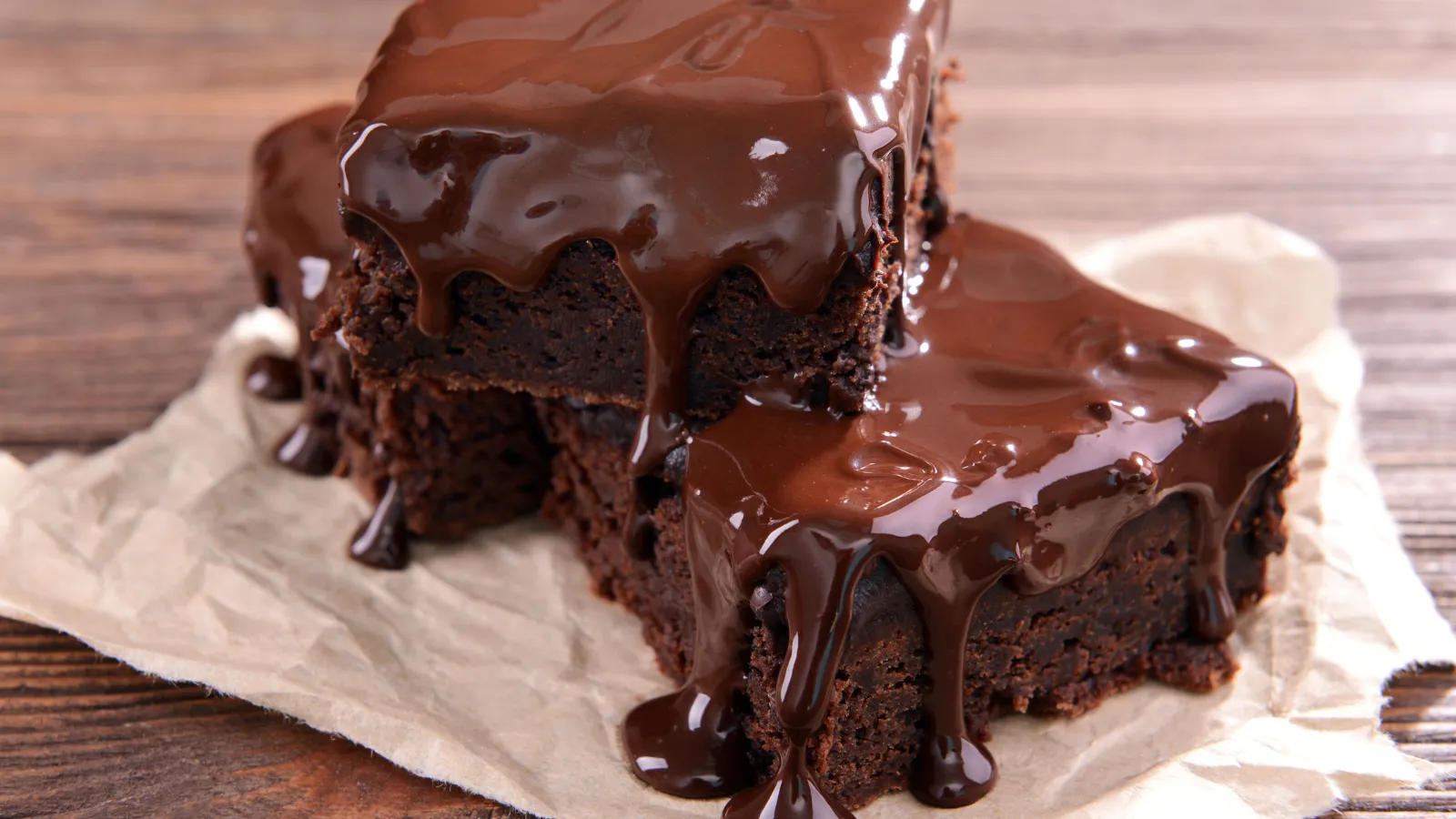
Learning how to make edibles at home comes down to four steps: activate the THC with heat, infuse it into a fat, cook it into a recipe, and cut it into even servings. The cooking is easy. The part most people get wrong is the math, and that’s where a dispensary label helps: it tells you exactly how much THC you’re starting with.
This guide is written for beginners and first-time bakers who are 21 or older and cooking at home with cannabis they bought legally. Bloom budtender Michael B. walks through both classic edibles, brownies and gummies, and shows how to work out the THC in every piece from the numbers on the package.
What You Need to Make Edibles at Home
You don’t need special equipment. Most kitchens already have everything on this list.
- A THC source with a label: flower, a tincture, a distillate syringe or RSO from a licensed dispensary. The label gives you the starting number for your math.
- A fat: unsalted butter or coconut oil. THC dissolves in fat, not water.
- A baking sheet and parchment paper for decarbing flower.
- A saucepan, cheesecloth or a fine-mesh strainer for infusing.
- A kitchen scale that reads to 0.1 gram.
- Measuring spoons, a ruler or a silicone gummy mold so every serving is the same size.
- Labels and a container that locks or is kept out of reach.
Step 1: Read the Label Before You Cook
Every product from a licensed Ohio or Maryland dispensary is lab tested, and the label lists its THC content. That number is the starting point for every calculation in this guide. In Ohio, the THC in each package has to land within 10% of the amount on its label.
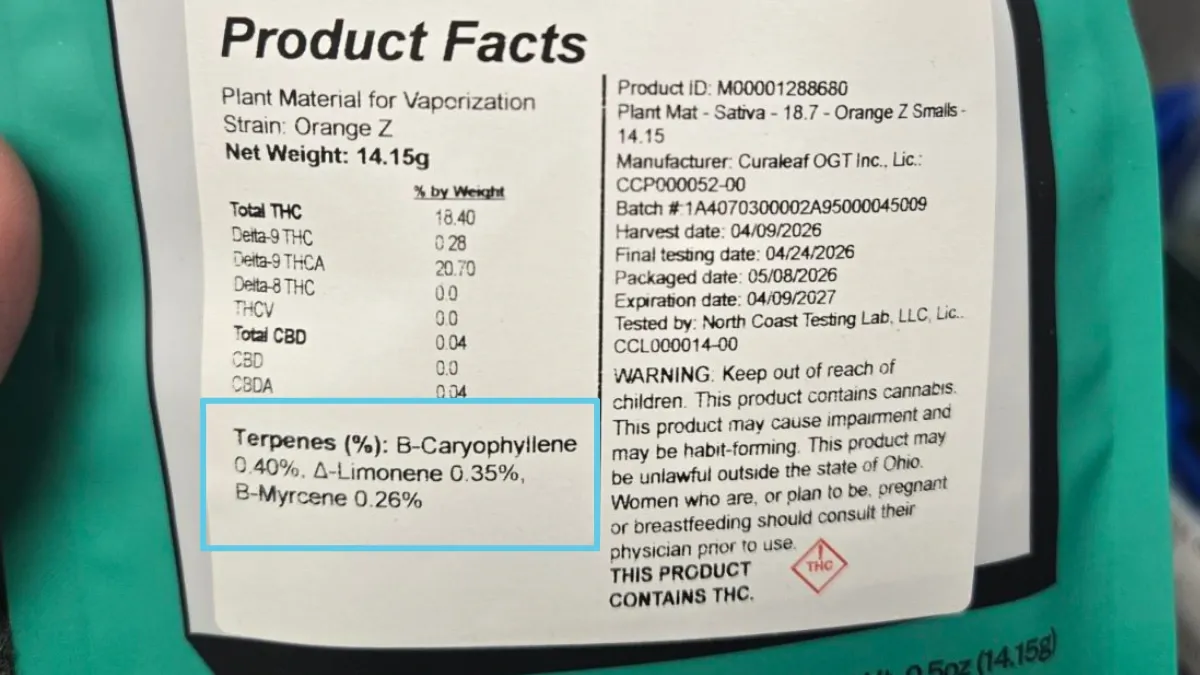
What to look for depends on the product:
| Product | What the label shows | How to turn it into milligrams |
|---|---|---|
| Flower | Total THC as a percentage (e.g. 20%) | Percent × 10 = mg per gram. 20% flower = 200 mg per gram |
| Tincture (oral drops) | Total THC per package and per serving, in mg | Package mg ÷ mL in the bottle = mg per mL |
| Distillate or RSO | Total THC in mg, or as a percentage of the gram | Use the mg figure, or percent × 10 × grams |
Check for THCA vs. THC. Flower is mostly THCA, which only becomes THC when heated. “Total THC” on a flower label is the amount you’d have if all of it converted, so you still need to decarb. Distillate and many tinctures are already activated, and the label will show most of the content as THC rather than THCA. For more, see the difference between THCA and THC and how to read a cannabis label.
Step 2: Decarb Your Flower
Raw flower won’t work in an edible until it’s heated. This step is called decarboxylation, or decarbing.
- Preheat the oven to 240°F (115°C).
- Break the flower into small pieces by hand or with a grinder. Don’t grind it to powder.
- Spread it in a thin, even layer on a parchment-lined baking sheet.
- Bake for 30 to 40 minutes, until it’s light golden brown and dry.
- Let it cool.
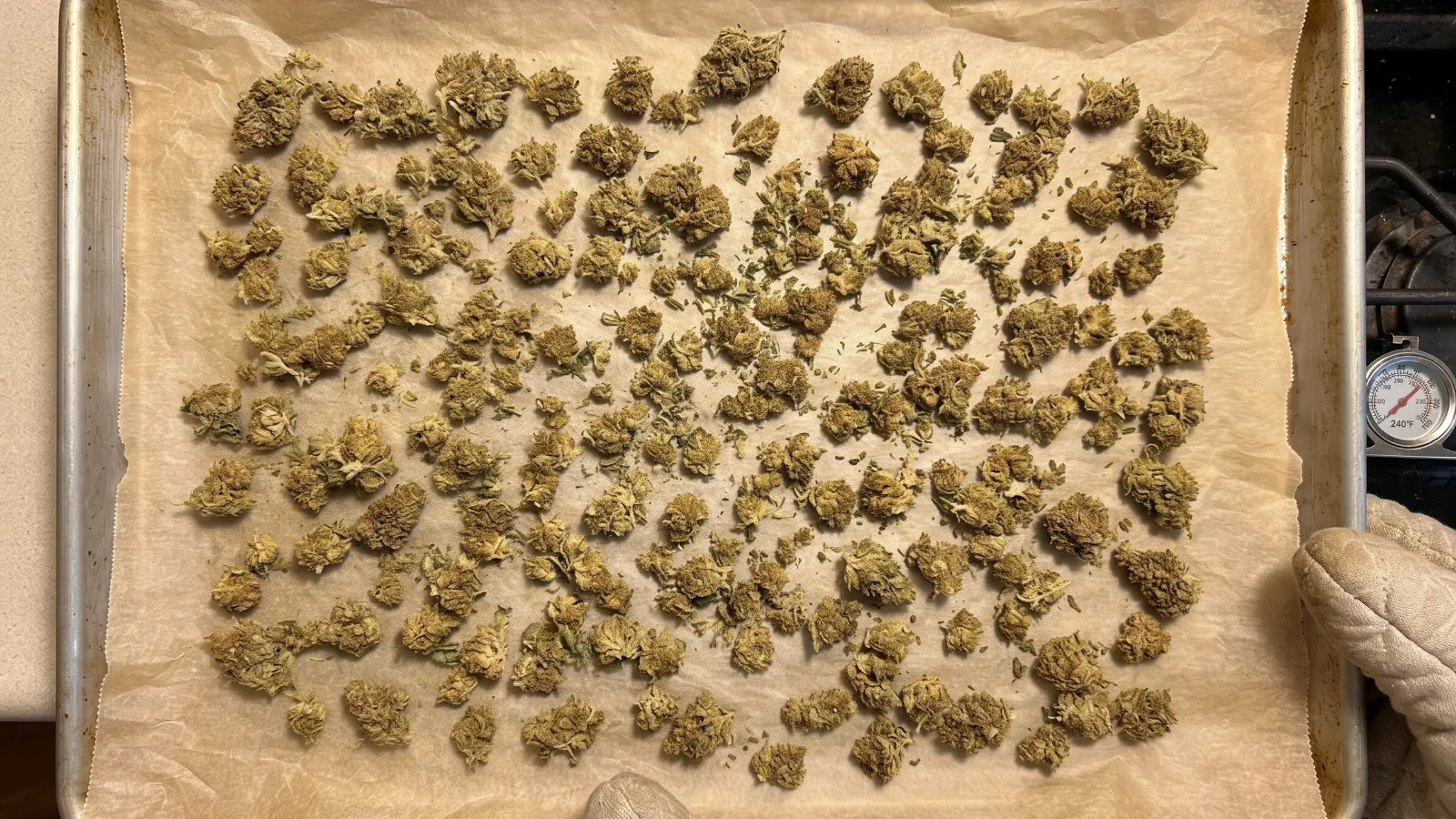
The kitchen will smell strongly while it bakes, so open a window. For the full method, see 8 easy steps to decarboxylate cannabis flower. Skip this step if you’re cooking with distillate or an activated tincture.
Step 3: Make Cannabutter or Infused Oil
Cannabutter is the base for brownies, cookies and most baked edibles. Infused coconut oil works the same way and is better for gummies.
- Melt 1 stick (½ cup) of unsalted butter with ½ cup of water in a saucepan over the lowest heat.
- Stir in your decarbed flower.
- Keep it at a gentle simmer for 2 to 3 hours, stirring now and then. Don’t let it boil.
- Strain through cheesecloth into a container. Don’t squeeze hard, or you’ll push plant bits through.
- Refrigerate until the butter sets on top of the water, then lift it off and throw the water away.
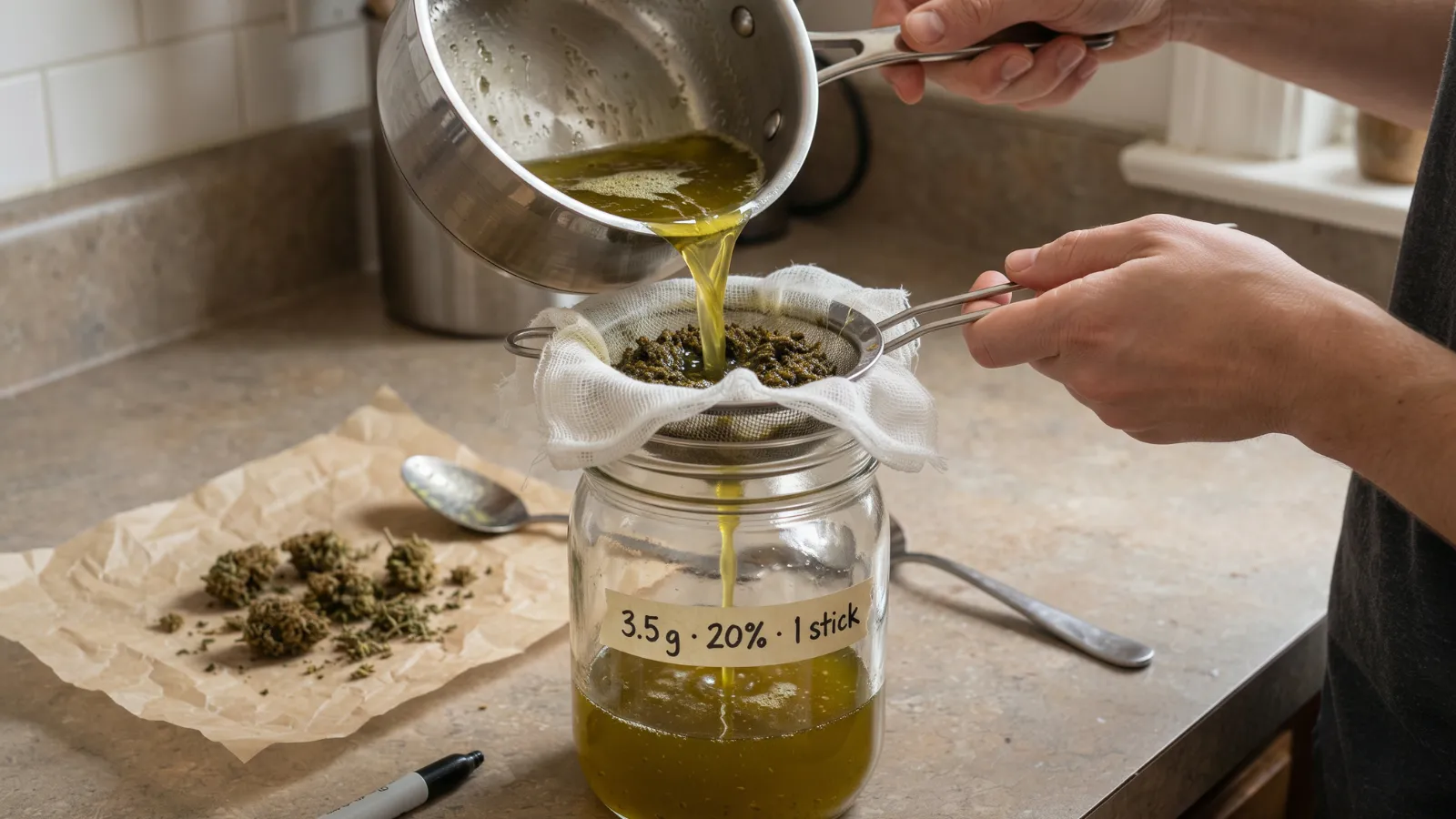
For oil, use the same steps without the water. Write the starting number on the jar: how many grams of flower, its THC percentage and how much butter or oil you used. Our cannabutter recipe and cooking with cannabis guide go into more detail.
“The cannabutter is my favorite since it’s easy to add to various snacks and foods, even my favorite toast and butter and grilled cheese. It’s perfect.” — Michael B., Bloom budtender
If you use cannabutter as a spread, the same math applies: measure it with a spoon and count every tablespoon toward your total.
Step 4: Work Out the THC per Serving
This is the step that makes homemade edibles predictable. It’s simple division.
THC in the batch ÷ number of servings = THC per serving
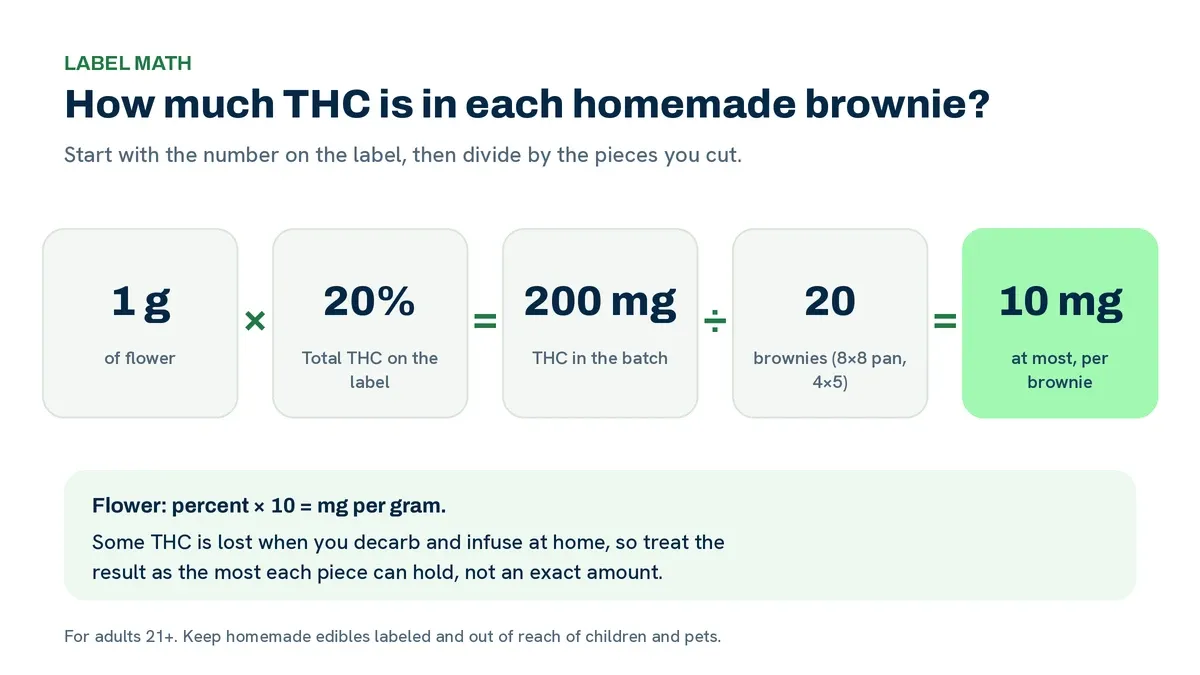
Start with the label: grams of flower × mg per gram. Then divide by how many pieces you’ll cut. A kitchen loses some THC during decarbing and infusing, so the result is the most each piece can hold, not an exact amount. Lab-tested store-bought edibles are the only way to know the exact number.
For comparison, a single serving of a store-bought recreational edible in Ohio or Maryland can’t contain more than 10 mg of THC, and a package can’t contain more than 100 mg. Homemade edibles have no such limit, which is why the math matters.
Worked examples:
| You start with | THC in the batch (label math) | Cut into | Up to this much THC per piece |
|---|---|---|---|
| 1 g of 20% flower in cannabutter | 1 × 200 = 200 mg | 20 brownies (cut the 8×8 pan 4×5) | 10 mg |
| 3.5 g (an eighth) of 20% flower in 1 stick of butter | 3.5 × 200 = 700 mg | 16 brownies | 44 mg |
| 2 tbsp of that cannabutter + 6 tbsp plain butter | 700 ÷ 8 tbsp × 2 = 175 mg | 16 brownies | 11 mg |
| 20 mL of a tincture labeled 300 mg per 30 mL | 20 × 10 = 200 mg | 40 gummies | 5 mg |
The third row shows the easiest way to control strength: make one batch of cannabutter, then mix a measured amount with plain butter. Want weaker edibles? Use less cannabutter, not smaller brownies. Need to brush up on weights? See how many grams are in an eighth.
How to Make Weed Brownies
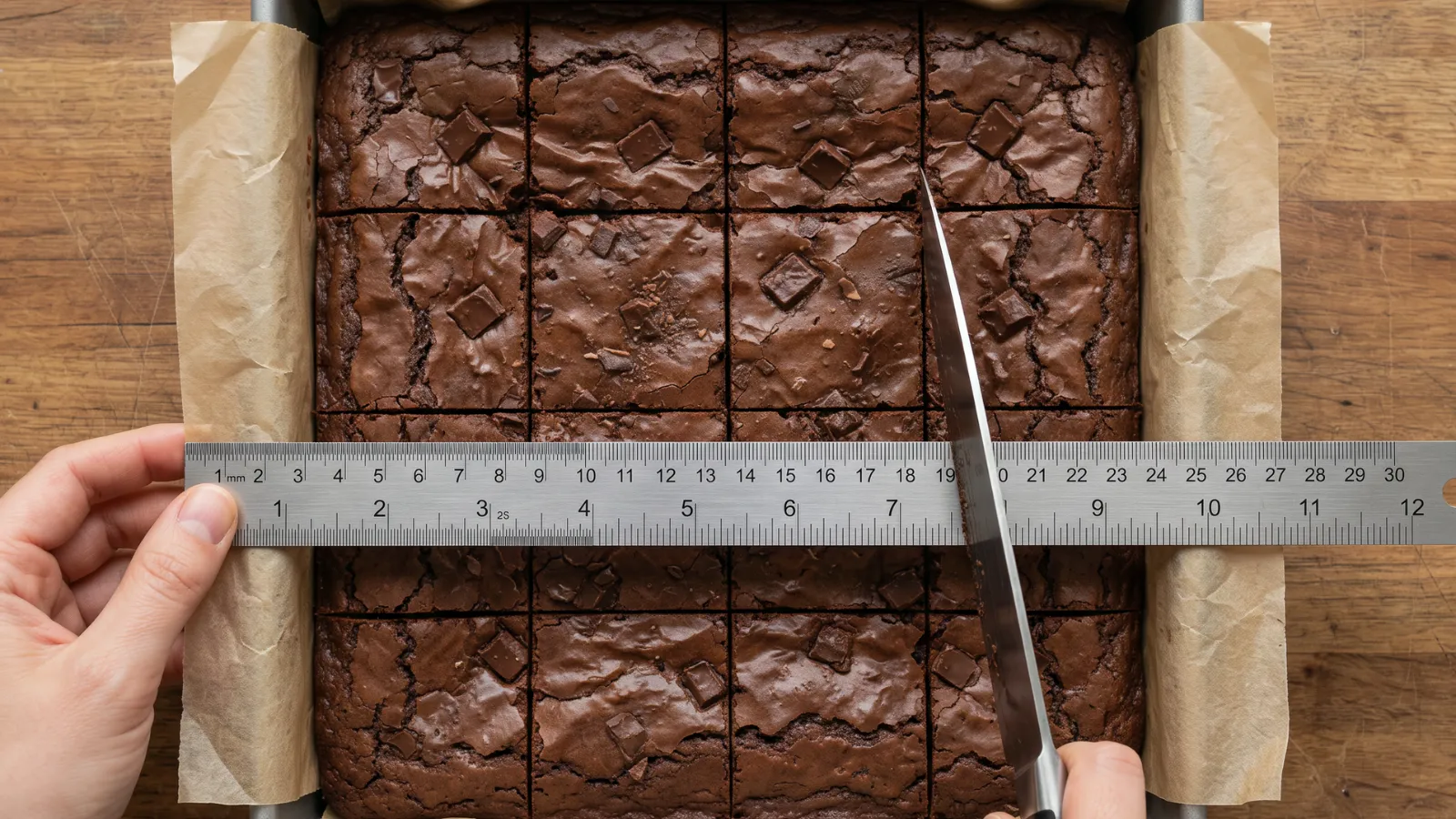
Brownies are the easiest edible to dose evenly. The batter is thick and fatty, so the cannabutter spreads through it well, and a square pan cuts into equal pieces.
“I tried the weed brownie recipe and it came out perfectly chewy. I did add extra chocolate on top, but that’s just me.” — Michael B., Bloom budtender
Ingredients (8×8-inch pan, 16 brownies)
- ½ cup (8 tbsp) butter in total: your measured cannabutter plus plain butter to make up the rest
- 1 cup sugar
- 2 large eggs
- 1 tsp vanilla extract
- ⅓ cup unsweetened cocoa powder
- ½ cup all-purpose flour
- ¼ tsp salt
- ¼ tsp baking powder
Steps
- Heat the oven to 350°F and line the pan with parchment.
- Melt the cannabutter and plain butter together over low heat. Don’t let it bubble.
- Stir in the sugar, then the eggs and vanilla.
- Add the cocoa, flour, salt and baking powder. Mix until there are no streaks. Even mixing means even servings.
- Spread the batter evenly into the corners and bake for 20 to 25 minutes.
- Cool completely, then use a ruler to cut a 4×4 grid.
Using a boxed mix: swap the oil or butter the box calls for with the same amount of your blended cannabutter, and follow the package directions. Divide the batch THC by the number of pieces you cut. For a cookie version, see recipes with weed butter.
How to Make Weed Gummies
Gummies take more care than brownies, because oil and gelatin don’t mix on their own. The easiest route is a dispensary tincture: its THC is already measured, so the label math is exact, and there’s no decarbing or straining.
Ingredients (about 40 small gummies)
- ½ cup fruit juice
- 1 box (3 oz) flavored gelatin
- 2 packets (¼ oz each) unflavored gelatin
- Your THC: a measured amount of tincture, or 1 to 2 tbsp of infused coconut oil
- 1 tsp sunflower lecithin (needed if you use oil; helps with tinctures too)
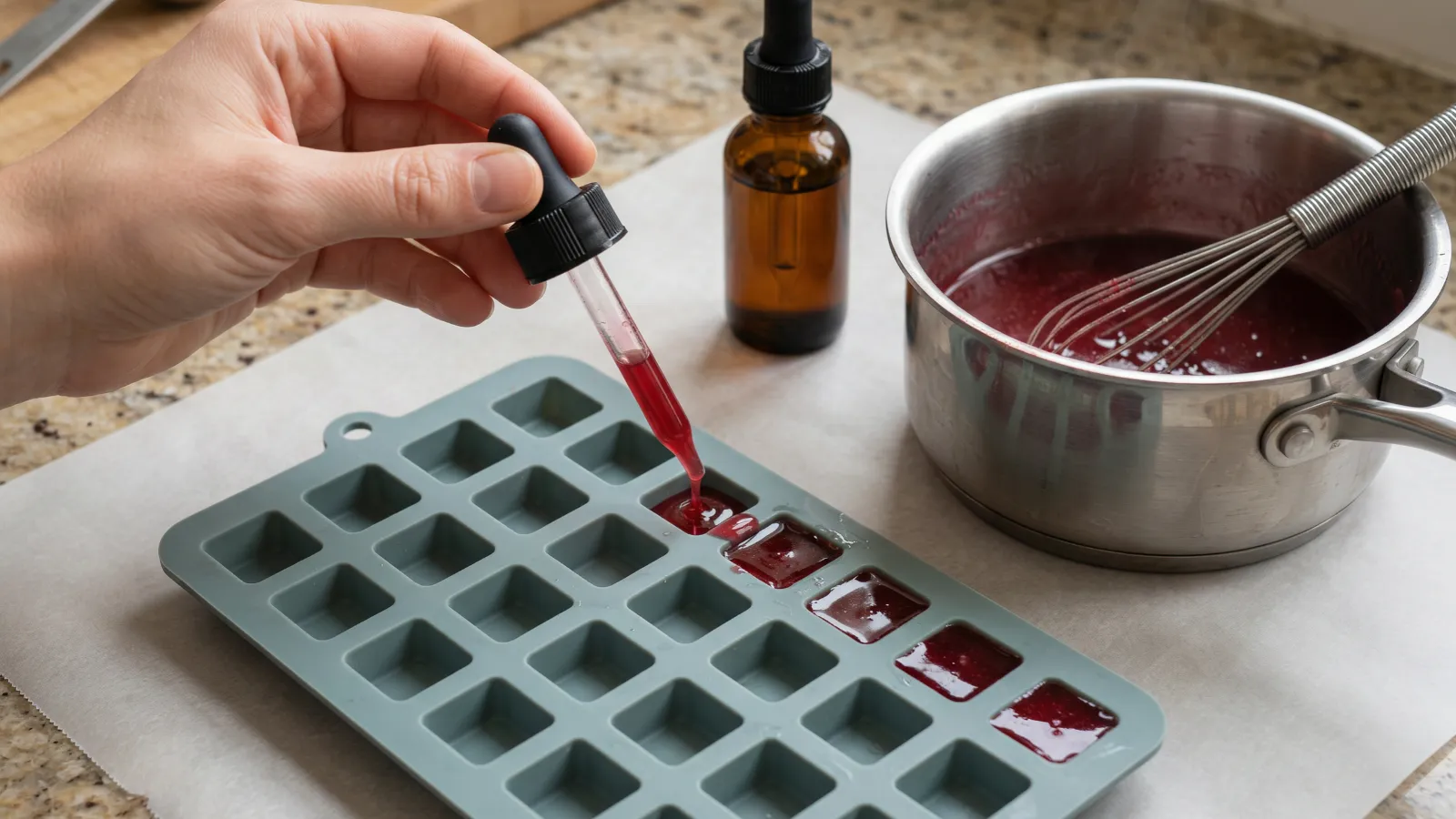
- A silicone gummy mold and a dropper
Steps
- Count the cavities in your mold. That count is your number of servings.
- Pour the juice into a small saucepan and sprinkle both gelatins over it. Let it sit for 5 minutes.
- Warm over low heat, stirring, until the gelatin dissolves. Don’t let it boil.
- Take the pan off the heat. Whisk in the lecithin, then the tincture or infused oil, for a full 2 minutes.
- Fill the mold quickly with the dropper, stirring the pan between fills so the THC stays mixed.
- Refrigerate for 1 to 2 hours, until firm, then pop them out.
If you see oil beads on the surface, the THC isn’t evenly mixed and some gummies will be stronger than others. More whisking and lecithin fix it. Learn more about how lecithin works in edibles and how THC tinctures work.
Other THC Sources to Cook With
You don’t have to start with flower. These products are labeled in milligrams and skip a step or two:
- Tinctures: already activated and measured per mL. Best for gummies and drinks.
- Distillate: activated THC oil in a syringe. Stir it into warm butter or oil. A 1-gram syringe labeled 850 mg holds about 85 mg in each 0.1 gram.
- RSO: a full-plant extract labeled in mg. Read what RSO is and how it’s sold in Ohio.
Whatever you use, the rule is the same: total milligrams from the label, divided by the number of pieces.
What you eat alongside an edible can change how it feels, too. See what to eat to make edibles hit harder.
Storing and Labeling Homemade Edibles
Homemade brownies and gummies look exactly like the regular kind, so labeling isn’t optional.
- Write “Contains THC,” the date and the THC per piece on the container.
- Store edibles in a locked box or out of reach, away from regular snacks.
- Keep them away from children and pets. If a pet eats one, see what to do if your pet ingests THC. For people, call Poison Help at 1-800-222-1222.
- Brownies keep about a week in an airtight container, or up to 3 months frozen. Gummies keep 2 to 3 weeks in the fridge.
- Never serve homemade edibles to anyone who doesn’t know they contain THC.
See more safe storage tips for homes with kids.
Common Mistakes When Making Edibles
- Skipping the decarb. Raw flower has very little active THC.
- Boiling the infusion. High heat breaks THC down. Keep it to a gentle simmer.
- Not mixing the batter enough. Uneven mixing makes some pieces much stronger than others.
- Guessing the serving size. Cut with a ruler, or use a mold, every time.
- Eating a second piece too soon. Edibles take longer to kick in than smoking, often up to two hours. Read the five mistakes first-timers make with edibles.
- Leaving them unlabeled. The most common way someone eats one by accident.
Is It Legal to Make Edibles at Home?
In Ohio and Maryland, adults 21 and over can make edibles at home for their own use from legally bought cannabis. You can’t sell homemade edibles, and you can’t give them to anyone under 21. Keep them at home and don’t take them across state lines.
Frequently Asked Questions
Do I have to decarb flower before making edibles?
Yes. Flower is mostly THCA, which isn’t active until it’s heated. Decarb it in the oven at 240°F for 30 to 40 minutes before infusing. Distillate and activated tinctures don’t need it.
How many edibles can I make from an eighth?
An eighth is 3.5 grams. At 20% THC, that’s up to 700 mg in the batch. Divide 700 by the THC you want per piece to get the number of servings. For example, 700 ÷ 10 = 70 pieces.
How do I calculate the THC in homemade edibles?
Multiply grams of flower by its THC percentage × 10 to get milligrams. Divide that by the number of pieces. The answer is the most each piece can hold, since some THC is lost in cooking.
Can I use a tincture instead of flower?
Yes. Tinctures are already activated and labeled in milligrams, so you skip the decarb and infusion steps and your math is exact. They’re the easiest way to make gummies.
What temperature should I bake edibles at?
Bake at 350°F or below. Most brownie and cookie recipes already do. Add tinctures and infused oils to gummies off the heat.
How long do homemade edibles last?
Brownies last about a week sealed at room temperature and up to 3 months frozen. Gummies last 2 to 3 weeks in the fridge. Cannabutter lasts about 2 weeks refrigerated.
Shop for Your Next Batch at Bloom
Every flower, tincture and concentrate at Bloom is lab tested and labeled with its THC, so you can do the math before you cook. Our budtenders can help you pick flower for baking or a tincture for gummies. Prefer to skip the kitchen? See the best edibles to try in Ohio.
Shop flower at Bloom Ohio or Maryland.
For adults 21 and over. Keep out of reach of children and pets.
About the author: Michael B. is a budtender at Bloom Akron. He helps shoppers read cannabis labels and choose products every day, tested the brownie recipe in this guide himself, and was featured in our guide to cannabis in hot weather.
For general information. This post isn't medical or legal advice. Cannabis rules differ between Ohio and Maryland and can change, so check with the Ohio Division of Cannabis Control or the Maryland Cannabis Administration. Talk to a healthcare provider before using cannabis for a medical condition. For adults 21+ and registered medical patients.
More from the Bloom blog.
Education5 min read
Cannabis Concentrates: Types, Potency and How to Use Them
A complete guide to cannabis concentrates: shatter, wax, live resin, live rosin, distillate, hash and kief, how they're made, how to use them and dosing.
Bloom TeamNovember 24, 2026
Education9 min read
What Is Hash? How It’s Made and How It Differs from Flower
Hash is pressed cannabis resin made from trichomes. See how it’s made, how it compares with flower and kief, and where to find it at Bloom.
Bloom TeamNovember 24, 2026
Education6 min read
What Is RSO? How It’s Made and How It’s Sold in Ohio
RSO is a full-spectrum cannabis extract made with a solvent like ethanol. See how it’s made, how it differs from distillate and how Ohio labels it.
Bloom TeamNovember 12, 2026
Earn points, get the deals first.
Join Bloom Rewards free and start with 200 points, plus member-only deals and news from Bloom.
- 200 points for joining
- 1 point per $1 spent
- 100 points = $5
- Member-only deals and drops
Earn at any Bloom in Ohio or Maryland. Pick your store when you sign up.